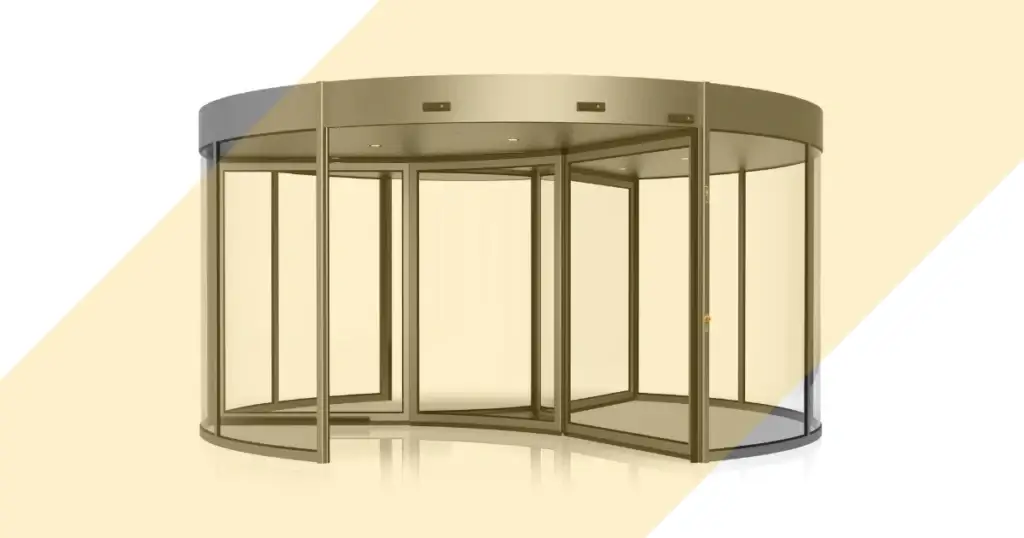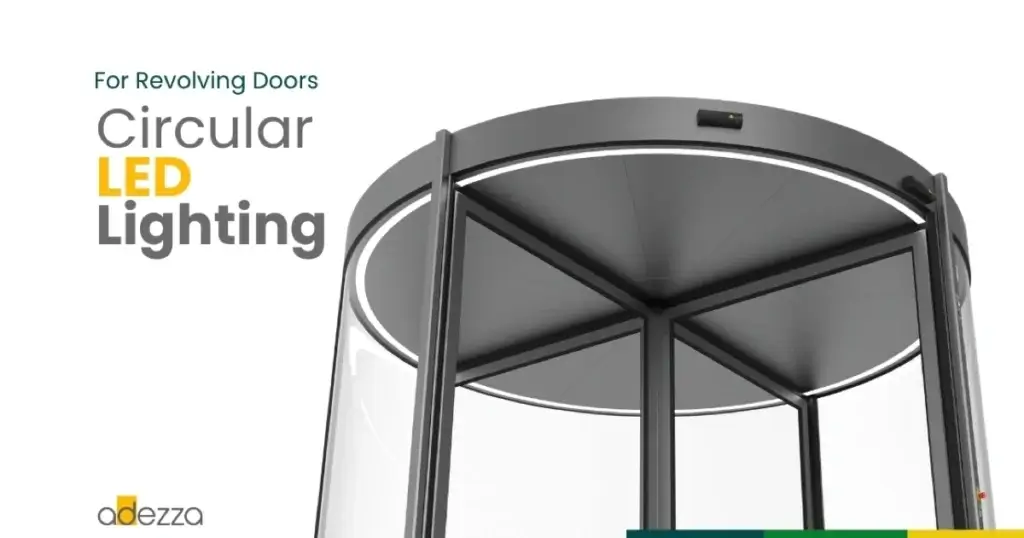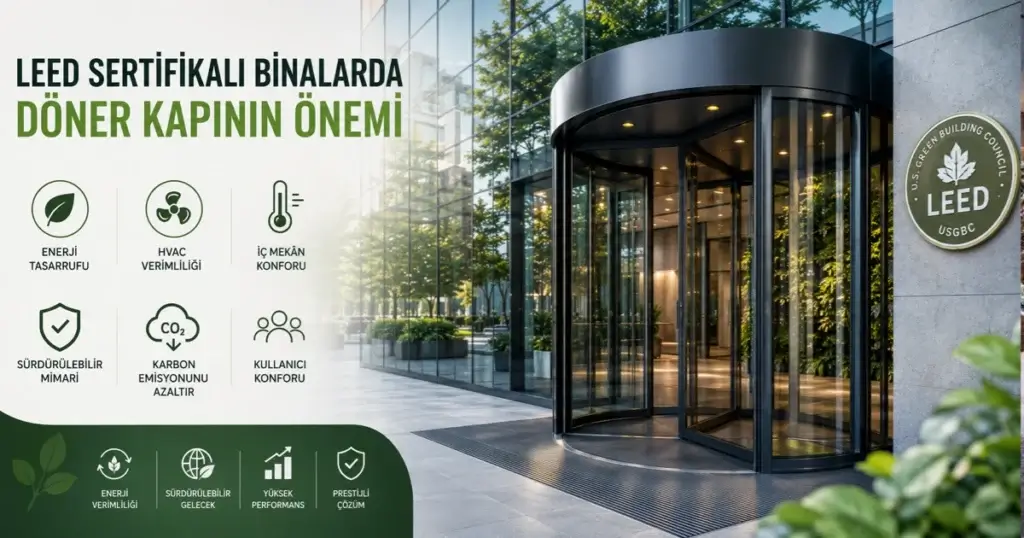
Revolving doors in LEED projects should be assessed alongside building energy performance, user requirements and architectural design. An appropriately selected entrance can help limit uncontrolled air exchange between indoors and outdoors.
However, a product’s potential contribution to energy efficiency does not mean that installing it automatically earns LEED points. Its role depends on the project’s rating system, targeted credits and available technical evidence.
For architects, mechanical engineers and sustainability consultants, the key question extends beyond the features listed in a catalogue. The team also needs to understand how those features affect the building and what documentation supports the assessment.
How Does LEED Relate to Product Selection?
LEED is a certification framework that evaluates sustainability at project level. It addresses areas including energy, water, materials and indoor environmental quality. The overall framework is explained in USGBC’s introduction to LEED.
An important distinction applies: LEED does not certify individual door products. Describing a door as suitable for consideration in a project pursuing LEED is therefore more accurate than calling it a “LEED-certified revolving door.” Its contribution depends on the project meeting the relevant requirements. USGBC’s guidance for product manufacturers explains this distinction.
This approach helps keep product selection focused on verifiable information rather than broad marketing claims.
Why Consider Revolving Doors in LEED Projects?
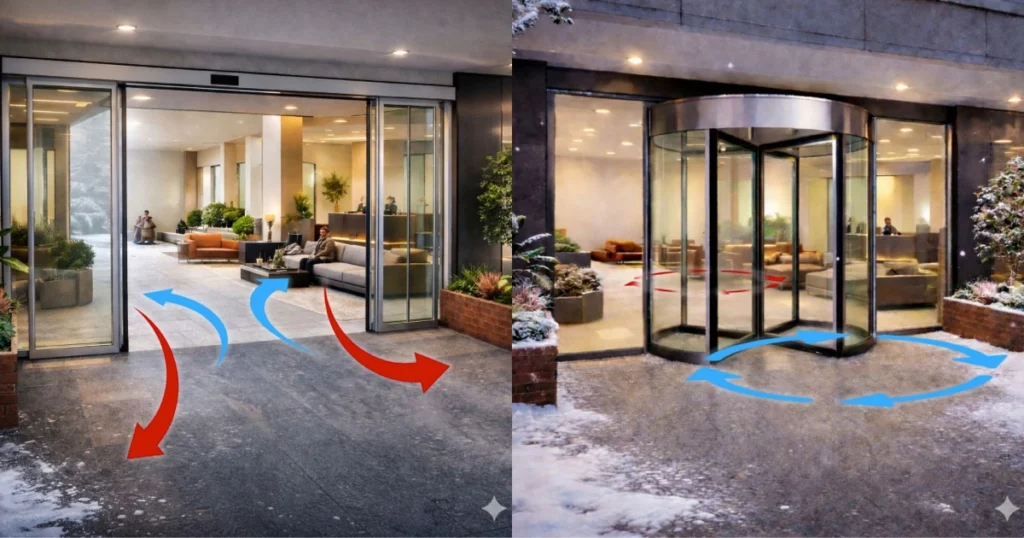
They Can Help Limit Entrance-Related Air Exchange
Building entrances allow air to move between indoor and outdoor environments as people pass through. In heated or cooled buildings, this movement can influence conditioning demand.
During normal operation, a revolving door’s compartments help limit a directly open passage between the two environments. The door is not completely airtight, however. Geometry, traffic, operating clearances and maintenance all affect performance.
The assessment should therefore consider the selected configuration and actual building conditions rather than relying on the product category alone.
They Can Support Entrance Comfort
Air movement can affect reception desks, waiting areas and seating located near an entrance. A suitable door arrangement may help reduce sudden changes in these spaces.
An improvement in perceived comfort does not, by itself, demonstrate achievement of a LEED credit. Entrance comfort should be considered alongside the mechanical system, interior layout and relevant project assessments.
They Encourage Coordinated Design Decisions
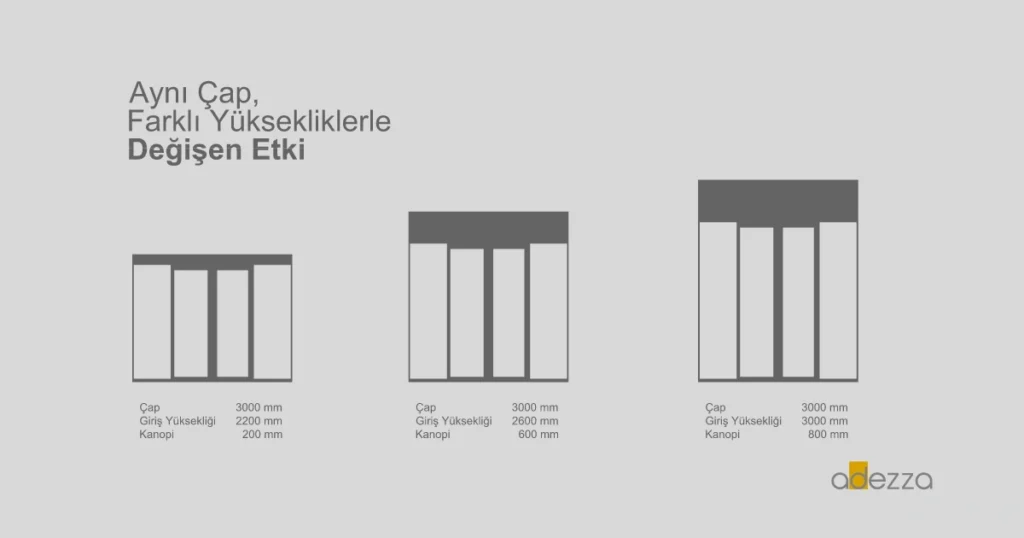
Door diameter, wing configuration, facade connections and pedestrian routes are closely related. A door that does not accommodate the required traffic may encourage visitors to use adjacent entrances.
When reviewing automatic revolving door options, energy objectives should therefore be considered together with practical access requirements.
What Information Supports an Energy Assessment?
The potential energy contribution depends on the entrance used as the comparison. An entrance that remains open for long periods presents a different baseline from a well-operated vestibule arrangement.
Useful project information may include:
- Building location and climate conditions.
- Required indoor temperature and humidity.
- Daily entrance operating hours.
- Pedestrian traffic and frequency of door use.
- Proposed door dimensions and operating modes.
- Use of adjacent doors.
- Motor, lighting and auxiliary equipment consumption.
- Available performance data and the conditions under which it was obtained.
This information helps the energy modelling team establish appropriate assumptions. How the door’s effect can be represented should be determined within the project’s chosen calculation method.
An improvement at the entrance should not be assumed to produce the same percentage reduction in whole-building energy consumption. Likewise, a reduction in heating or cooling load should not be presented as an identical electricity saving without considering system efficiency.
Why Do the LEED Version and Project Type Matter?
New construction, interior fit-outs and existing building operations have different assessment scopes. The version under which the project is registered also affects the applicable requirements.
LEED v5 emphasizes priorities including decarbonization, quality of life and ecological conservation. Nevertheless, the requirements for an individual project should be established from its registered version and rating system.
Obtaining a list of targeted credits and requested documents from the sustainability consultant before procurement can prevent unnecessary work later. A documentation package prepared for another project should not be assumed to provide the same contribution in a new assessment.
How Should Material and Environmental Documents Be Reviewed?
Product selection may involve material information as well as operational energy performance. Depending on project needs, the team may request product composition data, an environmental product declaration or material ingredient disclosures.
Each document should be checked for its relevance to the selected product and the requirement being assessed. Its title alone does not establish suitability; scope, validity and methodology also matter.
For example:
- Aluminum being recyclable does not demonstrate a particular recycled content in the supplied product.
- Documentation for one component does not automatically cover the complete door assembly.
- A management system certificate does not replace a product environmental declaration.
Published Adezza documents can be reviewed through the documents and certificates page. The availability of any project-specific environmental documentation should be confirmed for the proposed product and scope.
Five Steps from Design to Operation
1. Define Objectives Early
Establish energy, pedestrian capacity, accessibility and architectural requirements before choosing the door. Discuss potential contributions to the LEED assessment with the sustainability team.
Recording these objectives helps the design team compare options consistently.
2. Collect Configuration-Specific Information
Request technical information for the proposed dimensions and equipment, alongside the general catalogue.
Check that power consumption, operating assumptions and available performance data apply to the door being specified. Information for a different configuration may not provide a suitable basis for assessment.
3. Coordinate the Complete Entrance
Review the revolving door together with adjacent doors, matting, facade details and mechanical systems.
Accessible access and emergency exit needs should be satisfied independently of energy objectives. A successful entrance must accommodate the people who use it as well as the building’s performance targets.
4. Plan Post-Installation Checks
After installation, verify door settings, sealing components and control functions. Record whether the delivered assembly matches the approved design and selected equipment.
Resolving discrepancies at this stage helps keep the installed entrance aligned with the assumptions used during design.
5. Hand Over Operating and Maintenance Information
Provide the facilities team with manufacturer maintenance instructions, service access requirements and operating mode information.
Maintaining the intended performance depends partly on daily use and ongoing care. Worn components, unsuitable settings or changes to adjacent door use can affect the entrance after handover.
These steps describe a practical coordination process. They should not be interpreted as separate actions that each automatically earn LEED points.
Plan an Entrance Around Your LEED Objectives
Selecting revolving doors in LEED projects involves bringing technical information and building requirements together. The most useful approach is to identify the potential contribution clearly, support it with available evidence and include it in the project assessment.
Share your entrance dimensions, operating scenarios and consultant’s documentation requests with Adezza’s team to discuss suitable options.