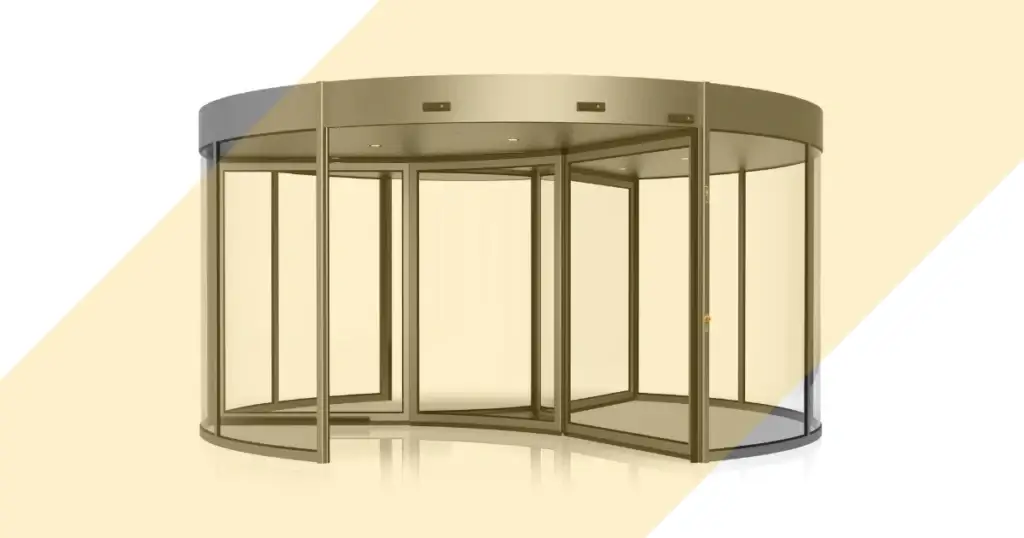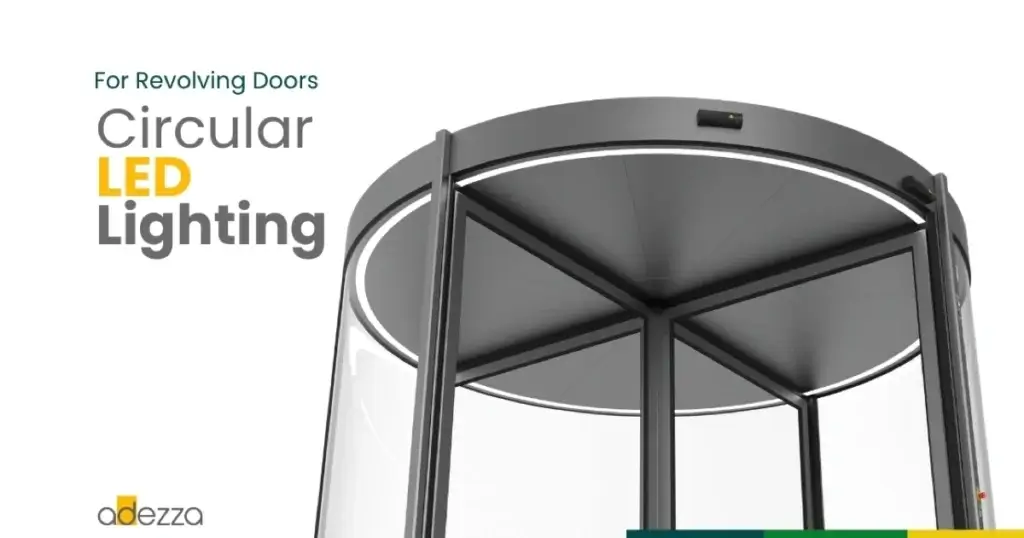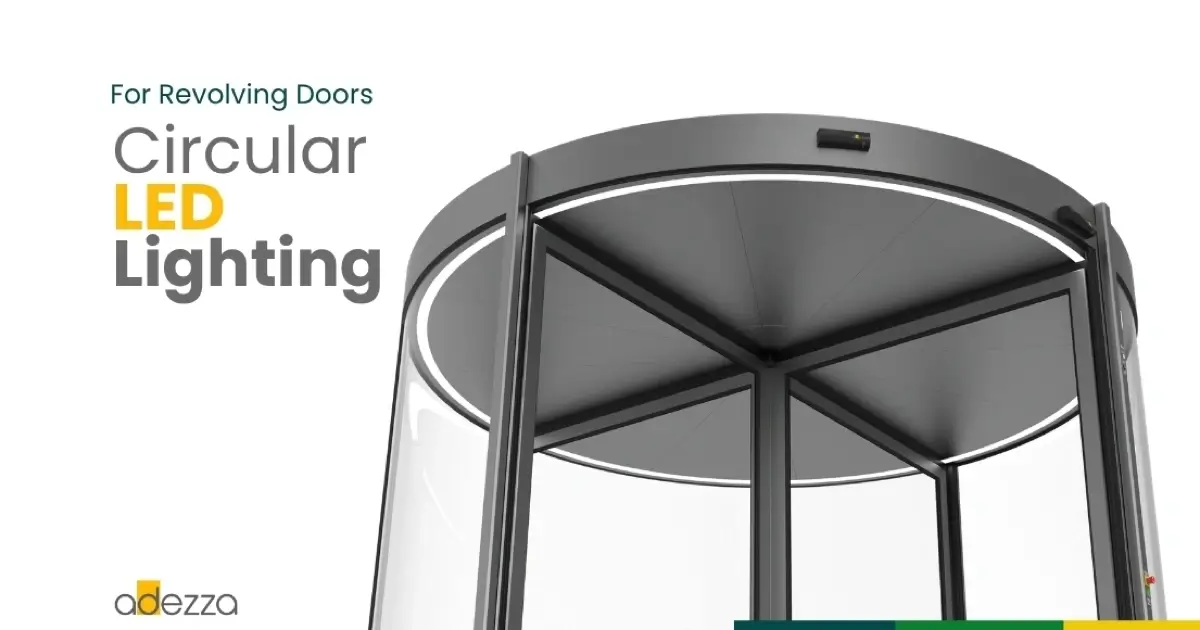
Circular LED lighting for revolving doors can emphasize the door’s geometry and give a building entrance a distinctive architectural character. In hotels, offices and shopping malls, it can help coordinate the appearance of the door with the facade and interior lighting.
A successful installation involves more than creating an eye-catching ring of light. Brightness, light color, reflections in the glazing and illumination of the floor should be considered together. A solution that looks balanced during the day may appear excessively bright at night, while a striking exterior detail may create distracting reflections from inside.
Lighting should therefore be addressed early in the entrance design process.
What Is Circular LED Lighting for Revolving Doors?
Circular LED lighting is arranged to create a ring or circular line of light in the upper section of the door. Its position depends on the door model, canopy construction and intended architectural effect.
Spotlights provide light from individual positions, while a circular arrangement emphasizes the perimeter geometry. However, a ring-shaped source does not automatically produce uniform illumination on the floor. The result depends on the optics and installation detail.
Adezza’s ADZ303 automatic revolving door range includes circular LED lighting as an optional feature. Dimensions, lighting characteristics and control arrangements should be confirmed for the proposed configuration.
How Does Circular Lighting Contribute to Entrance Design?
It Highlights the Door’s Geometry
The circular form is a defining feature of a revolving door. A lighting detail that follows this shape can establish a visual relationship between the overhead structure and the glazing.
After dark, the illuminated ring can help make the entrance more noticeable within the facade. Its brightness and position should be assessed alongside the surrounding exterior lighting.
It Connects Exterior and Interior Spaces
Coordinating door lighting with the lobby can create a more coherent visual transition into the building. For example, a strongly contrasting light color at the entrance may feel disconnected from a hotel interior designed around warm lighting.
The aim is not necessarily to make every light source identical. It is to establish an intentional relationship between the door, facade and interior.
It Influences the Appearance of Materials
Lighting changes how painted surfaces, metal finishes and glass are perceived. Reflective finishes may mirror the light ring, while matte surfaces produce a different effect.
Lighting decisions should therefore be coordinated with glazing and finish selections. Reviewing samples or a mock-up can reveal unexpected color differences and reflections before the installation is finalized.
Six Selection Criteria for Circular LED Lighting
1. Define the Lighting Task
Start by establishing what the lighting needs to achieve. Will the ring provide architectural emphasis only, or should it also contribute to illumination within the passage?
This distinction affects the required light output and the need for additional fixtures. A visible decorative ring does not, by itself, demonstrate that the floor and people moving through the entrance are adequately illuminated.
2. Choose Light Color in Context
Color temperature affects whether light appears warmer or cooler. The selection should be considered alongside the lobby, facade, signage and nearby light sources.
There is no single ideal color temperature for every building. A hotel’s arrival atmosphere may call for a different approach from a corporate office entrance. The appearance of the selected materials should also be reviewed under the proposed lighting.
3. Check Glare and Glazing Reflections
A bright source within the direct field of view, or a strong reflection in the glass, can become uncomfortable. These effects may be more noticeable when the exterior surroundings are dark.
Review the installation from the viewpoints of people approaching and leaving the door. Source position, shielding or diffusing elements, and brightness should be considered together.
4. Review Visual Continuity Around the Ring
Joints, shadows and localized brightness differences can be particularly noticeable in a circular lighting detail. The installation should therefore be assessed from both nearby and distant viewpoints.
A mock-up can help establish whether individual LED points are visible and whether profile connections interrupt the intended effect. The desired continuous appearance should be matched to the capabilities of the selected system.
5. Specify Control Requirements Early
Daytime and nighttime conditions may call for different light levels. Depending on the project, scheduling or dimming could be considered.
However, dimming, building automation connectivity and specific control protocols should not be assumed to be standard features. The LED modules, drivers and control equipment must be compatible. The intended operating scenario should be stated during specification and quotation.
6. Consider Maintenance Access and Exposure
Access to LED modules and drivers should be coordinated with the canopy design. The team should establish which parts need to be removed for cleaning or component replacement.
Temperature, moisture and dust conditions at the entrance should also inform selection. System life depends on more than the LED source; drivers, thermal management and other components influence reliability. These relationships are addressed in the US Department of Energy’s work on LED system reliability.
Does Circular LED Lighting Save Energy?
LED technology can provide efficient lighting solutions. A circular shape, however, does not inherently mean lower consumption. Total input power, operating hours and the required lighting level should be assessed together.
If an LED ring is added to existing spotlights without replacing another lighting function, overall electricity use may increase. Comparisons should therefore be made between options that meet equivalent lighting needs.
For a simple estimate, annual consumption can be calculated by multiplying total system input power by annual operating hours. Where dimming or scheduling is proposed, the actual operating profile should be included.
The Department of Energy’s introduction to LED lighting explains that products differ in characteristics such as light quality, control capability and performance. The word “LED” alone is not enough to establish the suitability of a system.
Verify the Design Through an Installation Review
Before final approval, or during a mock-up stage, assess the entrance from both inside and outside. Useful questions include:
- Does the light ring suit the proportions of the canopy and facade?
- Is the floor and passage adequately illuminated?
- Do glazing reflections interfere with comfortable viewing?
- Is the appearance balanced during both day and night?
- Does the light color work with signage and lobby lighting?
- Is the necessary maintenance access retained?
The decorative role of the ring should be distinguished from the entrance’s general lighting requirements. Emergency lighting and wayfinding needs should not be assumed to be satisfied by the installation without separate verification.
Reviewing these points before handover makes it easier to adjust brightness, resolve reflections and confirm that the completed entrance matches the intended design.
Create a Coordinated Entrance Lighting Scheme
Circular LED lighting for revolving doors can strengthen the architectural identity of an entrance when it is properly integrated. The result depends on coordinating light output, color, reflections and maintenance requirements with the door design.
Share your door dimensions, facade images and intended lighting effect with Adezza’s team to discuss suitable options for your project.