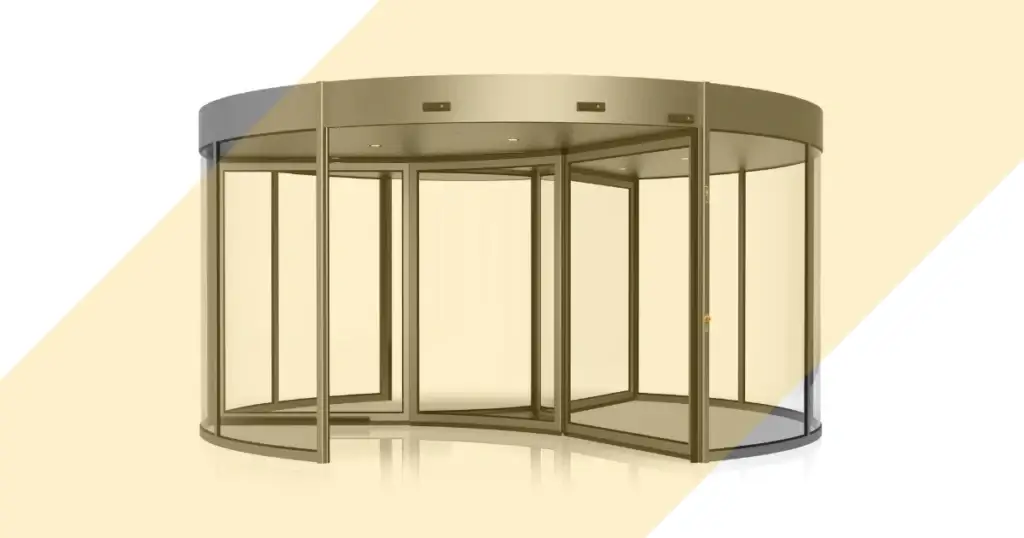
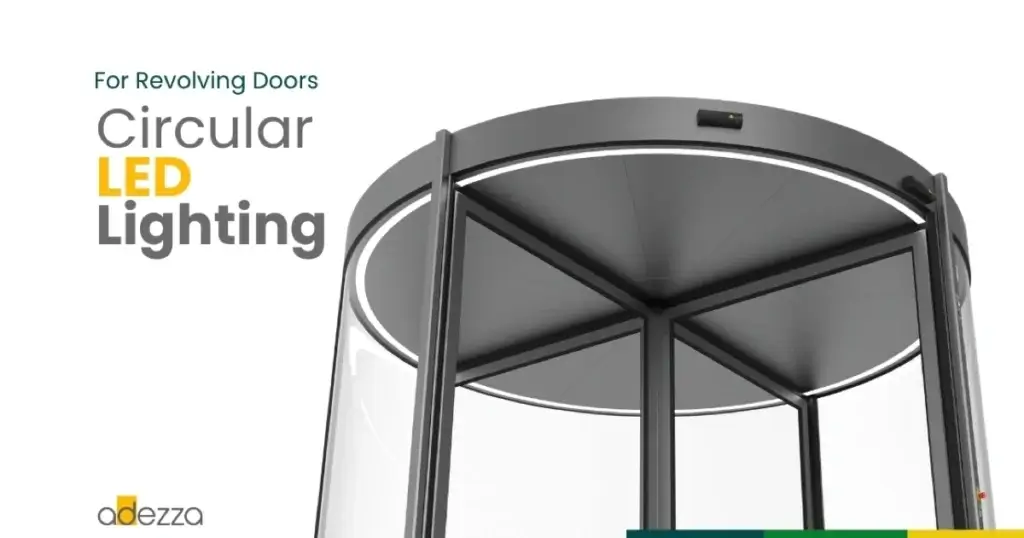
Revolving door applications range from hotels and shopping malls to office buildings and public facilities. These systems can help organize pedestrian movement, limit direct air exchange between indoors and outdoors, and complement the architectural design of an entrance.
However, entrance requirements vary between buildings. A hotel needs to accommodate guests with luggage, while an office may experience its busiest traffic within a short morning arrival period. Selecting a suitable door requires an assessment of building use, visitor profiles, peak demand and the available space.
This guide explores seven building types and the main considerations that should inform each entrance design.
Why Does Building Type Matter?
Building type helps establish who will use the entrance and under what conditions. However, a label such as “hotel” or “shopping mall” is not enough to select a door.
Two buildings of a similar size may have different opening hours, visitor numbers and circulation patterns. Before choosing a system, the project team should establish:
- How many people enter and leave during peak periods.
- Whether users carry luggage, shopping or equipment.
- How much clear space is available on both sides of the door.
- How exposed the entrance is to wind and rain.
- How accessible access, service routes and emergency exits will be arranged.
These requirements provide a basis for selecting door diameter, wing configuration, automation and complementary entrance solutions.
What Are the Main Revolving Door Applications?
1. Hotels and Hospitality Buildings
A hotel entrance is an important first point of contact for guests. Alongside appearance, the design needs to consider luggage and people moving at different walking speeds.
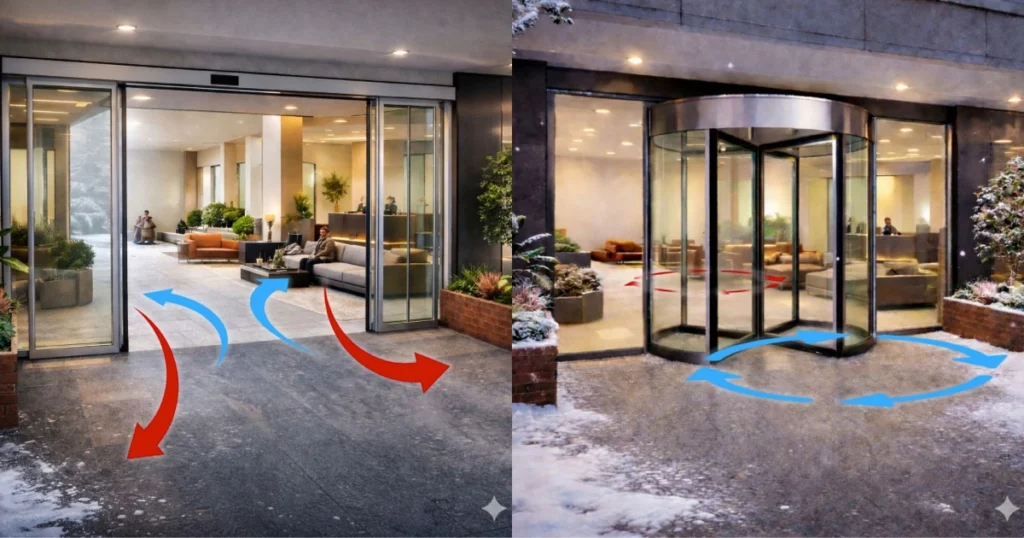
Reception desks, seating and waiting areas are often close to the entrance. Air movement at the doorway can therefore affect lobby comfort. An appropriately designed revolving door can help limit air exchange between the interior and exterior.
Group arrivals, airport transfers and busy check-in periods should inform the selection. Reception activity and luggage waiting areas should be positioned so they do not restrict movement through the door. Suitable alternative access should also be considered for oversized baggage and service requirements.
2. Shopping Malls and Large Retail Stores
Visitor demand in retail buildings can change substantially throughout the day. Weekends, promotions and events may create short periods of concentrated traffic.
Daily visitor totals alone are not enough to assess entrance requirements. Designers should also consider simultaneous entry and exit, families with children and people carrying purchases.
For projects with generous entrance space, showcase revolving doors may be worth assessing. Suitability should be established from the usable compartment space and the expected traffic pattern.
Retail displays and advertising can also affect how easily visitors understand the entrance. Approaches should remain clear, and people leaving the door should have sufficient space to continue into the building or onto the external circulation route.
3. Offices and Corporate Headquarters
Office entrances often experience distinct morning, lunchtime and evening peaks. The entrance arrangement needs to accommodate the two-way movement associated with these periods.
Reception desks, visitor registration points and security gates can create queues immediately beyond the entrance. Door selection should therefore be coordinated with the circulation space that follows it.
Automatic revolving door systems can be considered where an automated entrance is preferred. If interaction with the building’s access control system is required, the intended integration should be defined during the design stage rather than assumed to be a standard feature.
4. Hospitals and Healthcare Buildings
Healthcare entrances serve people with a wide range of needs. Visitors, staff, people requiring mobility assistance and personnel transporting equipment may all use the same arrival area.
Revolving doors may be considered for general visitor or lobby entrances where the project conditions are suitable. Separate, appropriate routes should be planned for stretchers, hospital beds and emergency movements.
Selection should account for people walking slowly or moving with a companion. A revolving door should not be treated as an infection control or hygiene system in its own right. Its role needs to be considered within the healthcare building’s wider circulation and operational plan.
5. Airports and Transport Terminals
Travelers often approach terminal entrances with suitcases, cabin bags or luggage trolleys. Passenger numbers are therefore only part of the capacity assessment.
Where a revolving door is proposed, its compartment geometry and intended operating conditions should be checked against these requirements. Suitability for luggage trolleys should not be assumed from the door diameter alone.
Flight and service schedules may also generate sudden arrival peaks. Coordinating several entrances, providing clear wayfinding and making alternative routes easy to identify are important considerations for these projects.
6. Public Buildings and Cultural Facilities
Municipal offices, museums, libraries and cultural venues welcome visitors of different ages and mobility levels. Some people may be unfamiliar with revolving doors.
A clear entrance layout, unobstructed approaches and visible alternative access help visitors understand how to enter the building. School groups and organized tours should also be considered where they form part of the expected traffic.
From an architectural perspective, door proportions, glazing and finishes can be coordinated with the character of the facade. These choices should support an entrance that is both visually coherent and straightforward to use.
7. Convention, Exhibition and Event Centers
Event venues can experience concentrated demand within very short periods. Session starts, breaks and closing times create different entry and exit patterns.
An average daily visitor figure may conceal the actual demands placed on the entrance. Assessment should focus on the busiest arrival and departure periods.
A revolving door can form part of the overall entrance arrangement. Other routes should be planned for group arrivals, equipment deliveries, service access and emergency exits. Ticket checks and security screening beyond the entrance must also be considered because queues can affect door operation and pedestrian flow.
Selection Criteria Across Different Applications
Traffic Capacity and User Needs
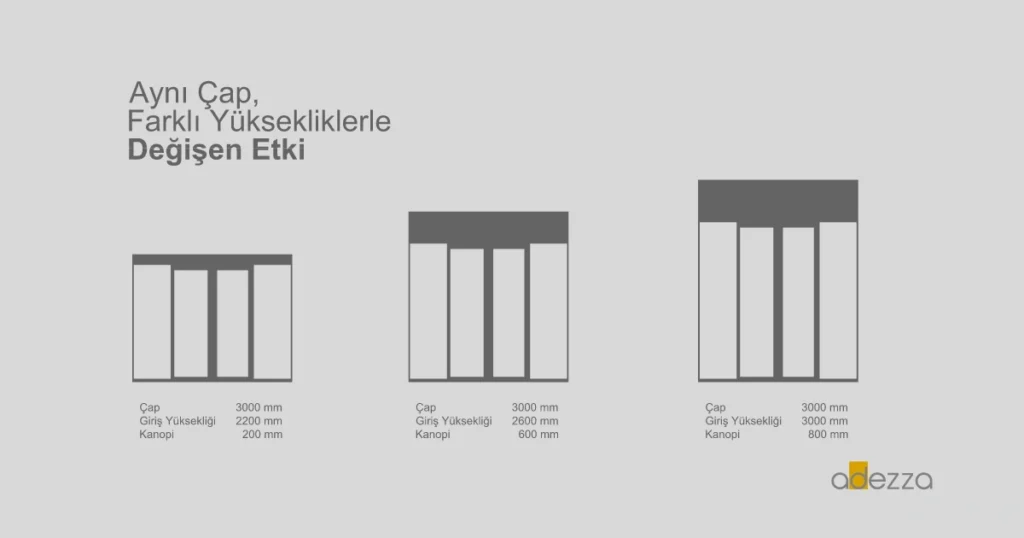
Door diameter, wing configuration, usable compartment space and operating settings should be assessed together. A larger door does not automatically deliver greater practical throughput in every situation. User behavior and the surrounding layout also influence performance.
For example, an entrance serving individuals arriving throughout the day presents a different challenge from one receiving groups immediately before an event.
Climate and Entrance Comfort
Wind direction, facade exposure and indoor-outdoor temperature differences can affect entrance performance. Energy assessments should also account for operating hours and the electricity used by the entrance equipment.
Any expected energy benefit should be evaluated against the actual project conditions. A single saving percentage cannot be applied to every building.
Accessible Access and Alternative Routes
Accessible entrance arrangements and emergency exit provisions should be checked against the requirements applicable to the project location. Installing a revolving door does not, by itself, establish that every user’s access needs have been met.
Alternative routes should be considered as part of the overall entrance experience, with attention to their position, visibility and practical usability.
Maintenance and Operating Conditions
Opening hours, cleaning routines and maintenance access should be considered before installation. Buildings operating for extended hours should also plan how people will enter and leave while maintenance takes place.
Providing an appropriate alternative entrance can make these periods easier to manage and reduce disruption to daily operations.
Find the Right Revolving Door for Your Project
Revolving door applications cover many building types, but the appropriate solution depends on how each entrance will actually be used. Architecture, pedestrian demand, climate and operating routines should inform the design together.
Share your building type, entrance dimensions and expected traffic with Adezza’s team to discuss suitable options for your project.