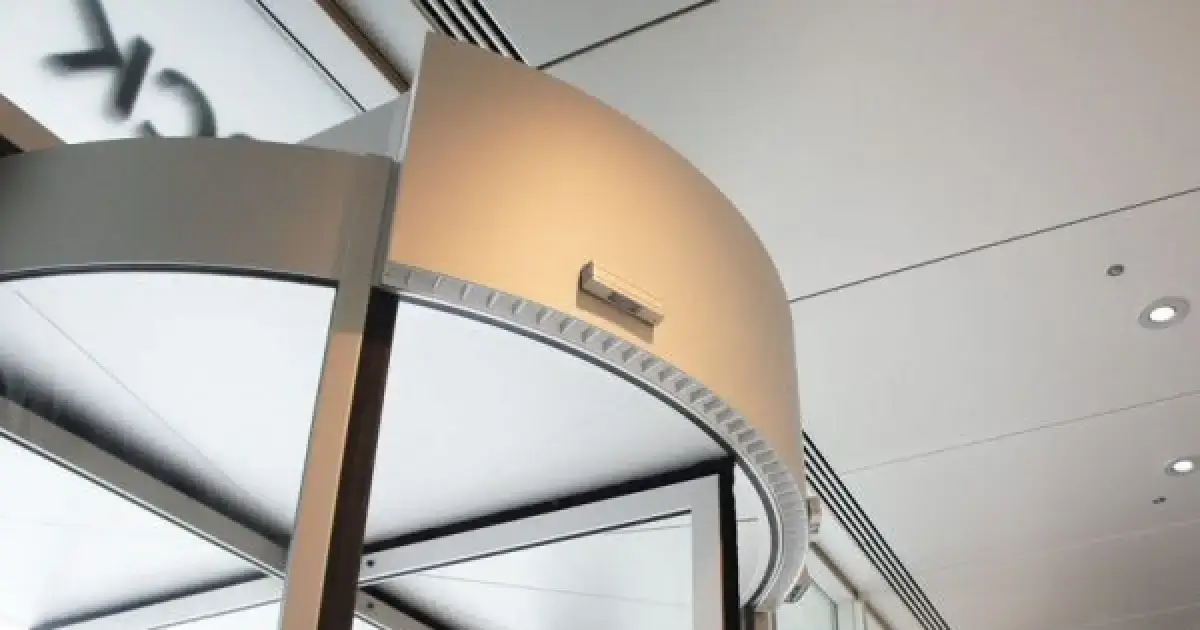
A revolving door air curtain is a complementary entrance solution designed to help limit unwanted air exchange and improve comfort around a building entrance. It can be considered alongside revolving doors in hotels, shopping centres, office buildings and hospitals, particularly where entrance conditions affect nearby reception desks or waiting areas.
Successful integration involves more than choosing a powerful unit. Door dimensions, mounting height, building pressure, pedestrian traffic and maintenance access all influence the result. This guide explains how the two systems work together and outlines six key criteria for selecting an appropriate solution.
What is a revolving door air curtain?
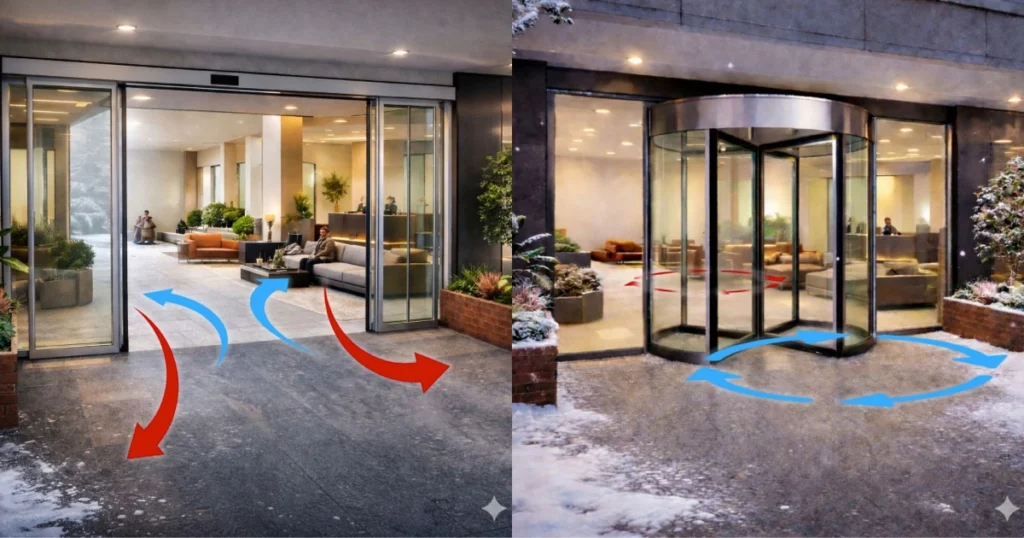
An air curtain uses fans to generate a directed stream of air across an opening. Its purpose is to help limit unwanted air movement between adjacent environments. When installed with a revolving door, it complements the door’s compartmented entrance arrangement.
The revolving door controls pedestrian passage while limiting a continuously open connection between indoors and outdoors. The air curtain helps manage airflow in the area where it is installed. These are different functions that can be coordinated within the same entrance design.
An air curtain does not replace a physical door, a ventilation system or an air filter. It does not create a completely airtight entrance, and it should not be assumed to block every outdoor contaminant.
Explore Adezza’s air curtain solutions for available product information and technical details.
Why integrate an air curtain with a revolving door?
Building entrances can expose indoor spaces to changing outdoor conditions. People working at a reception desk or sitting near the entrance may experience these changes for much longer than visitors passing through the door.
An integrated arrangement can be considered to:
- Help reduce uncomfortable air movement near the entrance.
- Support more stable conditions around reception and waiting areas.
- Help limit heating and cooling loads associated with entrance air exchange.
- Coordinate entrance equipment with the architectural design.
- Improve comfort during busy operating periods.
The actual benefit depends on the installation. Wind exposure, pressure differences and unsuitable equipment positioning can change performance. A revolving door air curtain should therefore be selected around the conditions of the building, rather than treated as a standard addition to every entrance.
Six criteria for choosing a revolving door air curtain
1. Door dimensions and mounting height
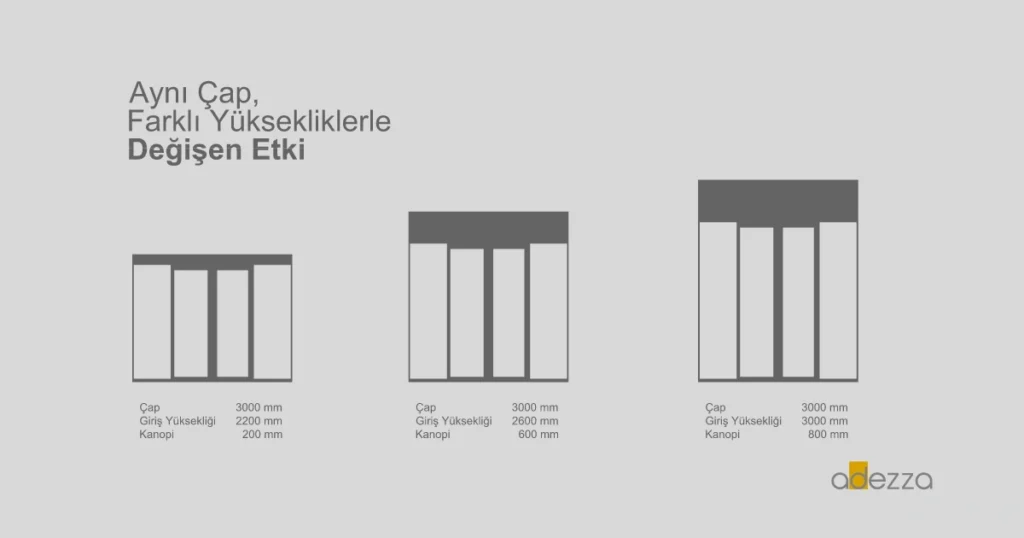
Start by defining the opening where the airflow will be applied. The overall height of the revolving door may differ from the distance between the air outlet and the finished floor. The canopy, ceiling finish and equipment position all influence this dimension.
Sharing both plan and section drawings helps the project team assess the installation. The drawings should show the air outlet, the area it needs to cover and any nearby obstructions.
Decorative panels must not restrict the air intake or discharge. If the entrance system has not yet been selected, the ADZ303 automatic revolving door and the air curtain requirements can be reviewed together during design development.
2. Airflow, discharge direction and wind exposure
A higher airflow rate does not automatically mean a better solution. Air direction, distribution across the opening and the effect on nearby occupants also matter.
The assessment should consider prevailing winds, the orientation of the entrance and whether a canopy or sheltered approach provides protection. Pressure differences created by the building’s ventilation system may also influence airflow at the entrance.
If a lobby experiences persistent draughts, increasing fan speed alone may not resolve the problem. The door, air curtain and mechanical systems should be reviewed together to identify the underlying cause.
3. Heated or unheated operation
Creating an air stream and heating that air are separate functions. Whether heating is needed depends on the climate, entrance arrangement and desired comfort conditions.
When considering electric heating or a water-based heating option, the project team should review the available infrastructure. Electrical supply, pipe routes and controls are easier to coordinate before installation begins.
A heated air curtain should not be assumed to meet the heating demand of the entire lobby. Its role is to support conditions around the entrance as part of the wider building strategy.
4. Controls that match the operating schedule
The operating schedule of a revolving door air curtain should reflect how the building is used. An office with concentrated morning traffic has different requirements from a hotel with arrivals throughout the day and night.
If the project requires door-linked operation, a time schedule or communication with a building management system, these functions should be specified clearly. Not every unit supports every control arrangement as standard.
The operating team also needs understandable instructions. Handover should explain routine settings, seasonal adjustments and which changes require technical support. Clear controls help prevent the system from being operated in a way that conflicts with the original design.
5. Noise and occupant comfort
Sound levels are particularly relevant when seating or workstations are close to the entrance. When comparing equipment, check the fan setting and measurement conditions associated with the stated sound data.
Commissioning should include more than confirming that the unit runs. The team should assess conversation comfort at reception, air movement in waiting areas and the experience of people entering and leaving.
The highest fan setting is not necessarily the most suitable setting. The objective is to balance airflow, noise and energy consumption for the specific installation.
6. Maintenance access and cleaning
In an integrated installation, service access is as important as appearance. Fans, air intake areas and relevant control components must remain accessible in accordance with the manufacturer’s instructions.
Signs, ceiling panels or decorative finishes should not block access panels after installation. Cleaning methods and inspection intervals should be established around operating hours, environmental conditions and the equipment requirements.
Providing clear operating and maintenance information at handover helps the facilities team manage the system. An entrance that allows straightforward servicing is easier to maintain throughout its working life.
How can an air curtain support energy efficiency?
Outdoor air entering a conditioned building needs to be brought closer to the required indoor conditions. This can add heating demand in winter, cooling demand in summer and, in some climates, additional moisture-control requirements.
An air curtain may help by limiting this exchange under suitable operating conditions. However, its fans and any heating components also consume energy. The net effect must account for both the reduced building load and the additional equipment consumption.
A meaningful assessment should consider:
- Building location and local weather conditions.
- Daily operating hours.
- Pedestrian traffic during busy periods.
- Indoor temperature targets.
- The use of the revolving door and adjacent entrances.
- Air curtain settings and energy consumption.
A fixed saving percentage should not be presented without a defined calculation or measurement basis. The same unit can produce different results in buildings with different entrance layouts and operating patterns.
Where performance is assessed after installation, weather conditions and occupancy should also be considered. A change in energy consumption cannot automatically be attributed to the air curtain if other building settings have changed at the same time.
Where can integrated air curtains be considered?
Hotels: Reception desks and lobby seating often make entrance comfort a priority. Luggage movement, guest arrivals and extended operating hours should be included in the assessment.
Shopping centres: High pedestrian traffic and seasonal weather conditions can affect entrance performance. Door capacity and equipment operation need to reflect real visitor patterns.
Offices and business centres: Morning and evening peaks, reception layouts and working hours influence the selection and control strategy.
Hospitals: Visitor entrances, stretcher routes and service access require separate consideration. Air curtains do not replace ventilation, hygiene procedures or infection-control measures.
Accessible alternative entrances and emergency arrangements must be addressed independently. Energy and comfort objectives should support a usable entrance, rather than restrict necessary access.
Plan an integrated solution for your entrance
The starting point for a revolving door air curtain installation is a clear description of the entrance, its operating pattern and the comfort issue to be addressed. Coordinating the door and mechanical services early can help reduce changes later in the project.
For an existing building, photographs, measured drawings and information about current operating problems provide a useful starting brief. For a new building, plans and sections allow the equipment to be considered alongside the canopy, ceiling and building services.
Share your entrance dimensions, building use and project requirements to request advice and a quotation from Adezza.