What Is a Heel Sensor? How Safety Sensors Work in Revolving Doors
A heel protection sensor is a safety device used on automatic revolving doors to detect contact with obstacles near the lower edge of a moving door wing. It is designed to help reduce entrapment and contact hazards during the door’s rotation.
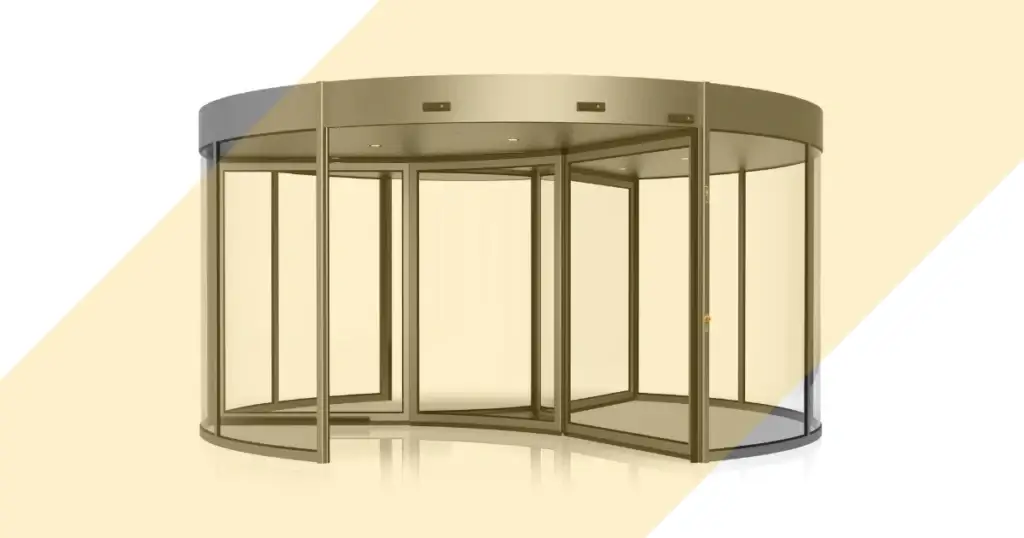
Automatic revolving doors are commonly installed in hotels, shopping centres, airports, hospitals and commercial buildings. Their rotating wings provide controlled pedestrian passage, but the movement of mechanical components also introduces specific safety considerations.
Heel protection sensors form part of a broader safety arrangement that may include finger protection devices, presence sensors, light curtains and emergency stop controls. Each component protects a different area or responds to a different operating condition.
Understanding how these revolving door safety sensors work is essential when selecting, specifying and maintaining an entrance system.
What Is a Heel Protection Sensor?
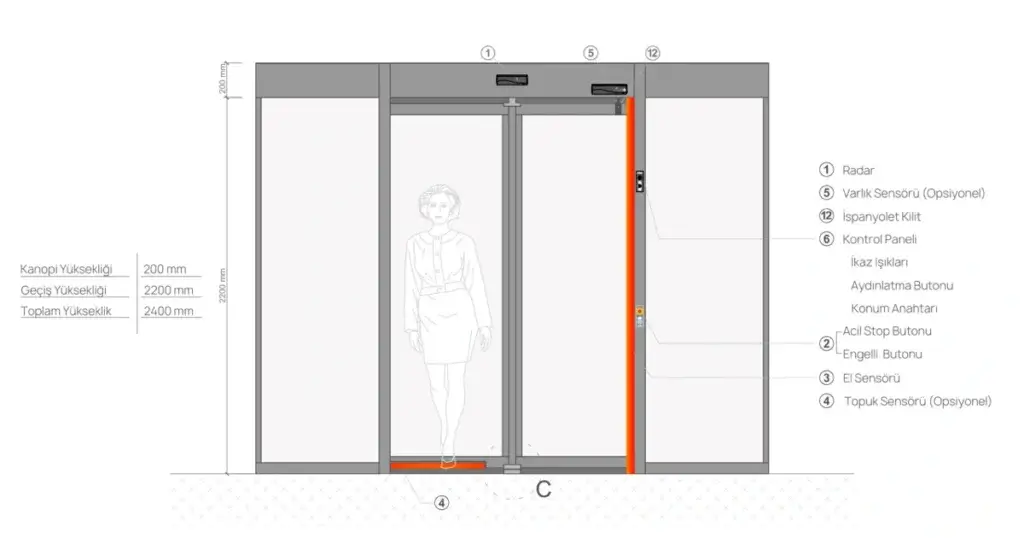
A heel protection sensor is a safety device positioned near the lower edge of a revolving door wing.
Its primary purpose is to detect contact involving a person’s foot, heel or another obstruction in the protected area and send a safety signal to the door controller.
In many applications, heel protection uses a pressure-sensitive safety edge. When an obstruction applies pressure to the protective element, the sensor activates and the control system initiates a stop response.
This can reduce the risk of continued movement against an obstruction.
An important distinction is that a contact-activated heel sensor does not necessarily detect every approaching obstacle before contact occurs. It provides protection for a particular hazard area and must be considered alongside the other safety devices required by the door design.
How Does a Heel Sensor Work in a Revolving Door?
A heel sensor operates through the interaction between the protective sensing element, the door controller and the drive system.
During normal operation, the revolving door wings rotate according to the selected operating mode and speed settings.
If an obstruction makes contact with the protected lower edge, a pressure-sensitive system can detect the resulting activation and send a signal to the controller.
The controller then commands the drive system to stop the revolving movement.
Consider a person moving through a revolving door while carrying a bag. If their foot or an object comes into contact with the protected lower edge of a rotating wing, the heel sensor may activate.
Stopping the door helps limit further movement against the obstruction.
The precise stopping behaviour, fault monitoring and restart conditions depend on the door model and its safety control configuration. Automatic restart should never be assumed to occur in the same way across all products.
For effective protection, the sensing element must be correctly installed, connected and maintained according to the manufacturer’s requirements.
Where Is the Heel Sensor Installed?
Heel protection sensors are installed in locations where contact hazards can arise near the lower section of moving revolving door wings.
Their exact position depends on the door’s geometry, number of wings and mechanical construction.
Some systems incorporate a pressure-sensitive contact edge extending along part of the lower wing. Other configurations may use different protective arrangements.
The sensor must cover the intended hazard area without interfering with the normal operation of the entrance.
Installation details are particularly important where floor finishes, recessed entrance mats or structural components affect clearances around the rotating wings.
A sensor that is incorrectly positioned may fail to provide the intended detection coverage, even if the electrical connection is functioning.
Types of Safety Sensors Used in Automatic Revolving Doors
Heel protection is only one aspect of revolving door safety.
Modern systems can combine contact-based protective devices with non-contact detection equipment and user-operated controls.
Finger and Hand Protection Sensors
Finger protection devices are designed to reduce trapping hazards where moving revolving door wings approach stationary posts or enclosure components.
These may include pressure-sensitive protective edges or other suitable sensing arrangements.
When the relevant contact or hazardous condition is detected, the controller can initiate a stop response.
Finger protection and heel protection are not interchangeable. They address different hazard areas and must be selected accordingly.
Presence Sensors
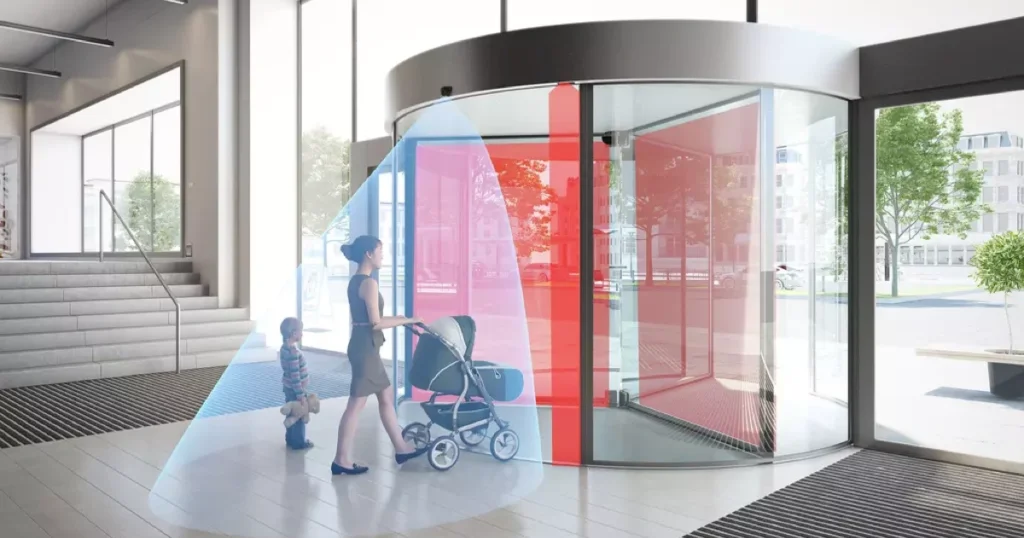
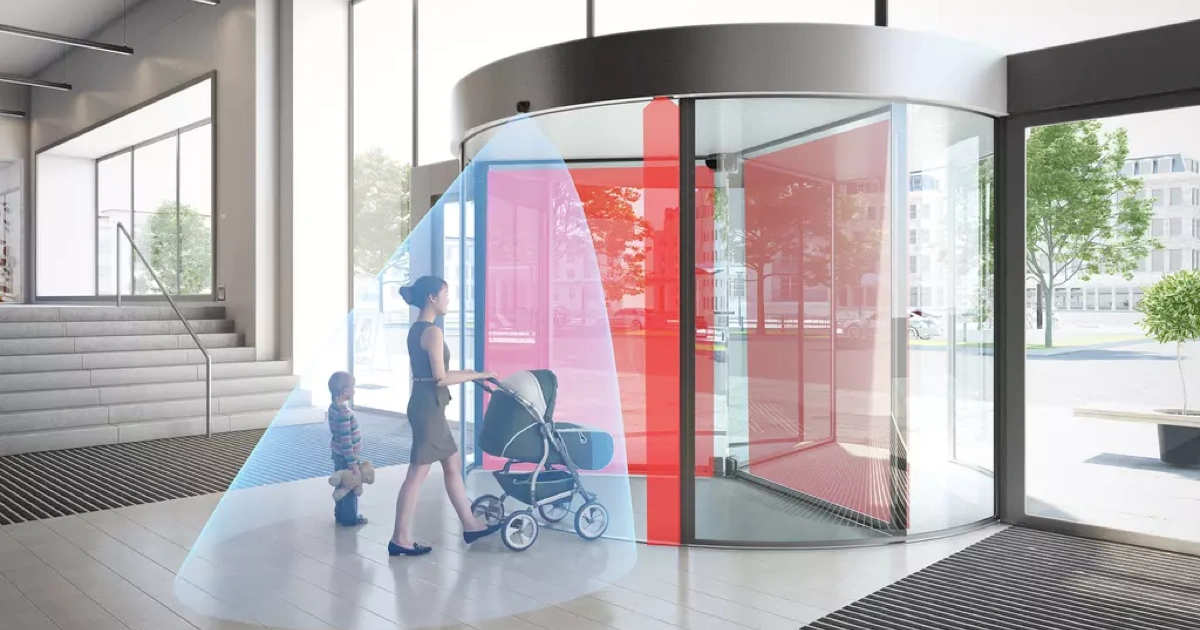
Presence sensors detect people or objects within a defined monitoring zone.
They may be used in areas where moving wings approach stationary panels, depending on the door’s design.
Unlike a contact-based heel sensor, a properly configured presence sensor can detect an obstruction without requiring physical contact.
Its protective performance depends on the detection technology, installation position and the conditions within the monitored area.
Light Curtain Sensors
Light curtain sensors monitor a defined region along the movement path or near selected closing areas.
On revolving doors, these devices may be installed on or near moving wings to detect people or objects entering a protected zone.
When detection occurs, the controller can stop the rotation according to the configured safety function.
Light curtains can help address hazards that cannot be adequately managed by contact edges alone.
However, their effectiveness depends on correct positioning, detection coverage and integration with the control system.
Motion Detection Radar
Motion detection radar is frequently used to identify pedestrians approaching an automatic entrance.
Its principal role is often to activate or manage door movement rather than directly protect every potential trapping point.
This distinction matters because an activation sensor should not be assumed to perform the same safety function as a protective edge or dedicated presence sensor.
For a broader explanation of sensor-operated entrances, see Automatic Door Systems: Revolving, Sliding and Sensor-Operated Types.
Heel Sensors vs Presence Sensors: What Is the Difference?
Both heel sensors and presence sensors can support safe revolving door operation, but their detection methods and protective roles differ.
| Feature | Heel Protection Sensor | Presence Sensor |
|---|---|---|
| Primary purpose | Detect contact at a protected lower edge | Detect people or objects within a defined area |
| Typical detection | Contact or pressure activation | Non-contact detection, depending on technology |
| Main protection area | Lower section of moving door wings | Selected movement or trapping zones |
| Controller response | Stop signal when activated | Safety response according to the configured function |
| Typical application | Foot and heel contact protection | Monitoring protected passage or closing areas |
These systems are complementary rather than interchangeable.
A revolving door may require several different protective functions depending on its dimensions, operating conditions and risk assessment.
Are Heel Sensors Standard on Every Revolving Door?
Heel protection sensors are not necessarily standard equipment on every revolving door model.
The equipment configuration depends on the product design and the manufacturer’s published specifications.
Adezza’s current product information identifies the following arrangements:
| Adezza model | Heel protection sensor |
|---|---|
| ADZ303 Automatic Revolving Door | Optional |
| ADZ203 Glass Centered Revolving Door | Optional |
| ADZ503 Vista Showcase Revolving Door | Standard |
| ADZ603 Combo 2-Leaf Revolving Door | Standard |
For example, the ADZ303 Automatic Revolving Door lists heel protection, presence and light curtain sensors as optional equipment, while finger protection is provided as standard.
The ADZ503 Vista Showcase Revolving Door includes heel protection and presence sensors as standard features.
Similarly, the ADZ603 Combo 2-Leaf Revolving Door incorporates standard heel protection, presence and light curtain sensors.
These designations reflect the published product configurations. An optional equipment listing does not establish that a particular installation can safely or lawfully operate without that device. Project-specific protective measures must be determined through the applicable safety requirements and risk assessment.
Emergency Stop and Reduced-Speed Operation
Automatic revolving doors may also include emergency stop buttons and controls intended to support slower passage.
Emergency stop devices allow a user to initiate a stopping command when an unsafe condition is identified.
Reduced-speed controls operate differently. Where supported by the model, they lower the rotation speed to facilitate more controlled passage for certain users.
These features perform separate functions.
An emergency stop is not a substitute for automatic hazard detection, and reduced-speed operation does not remove the need for suitable protective devices.
Accessibility also requires consideration of the complete entrance design, including appropriate alternative routes where necessary.
How Should Revolving Door Safety Sensors Be Maintained?
Safety equipment must remain functional throughout the operating life of an automatic revolving door.
Regular inspections should address the physical condition of protective edges, sensor mounting, electrical connections, detection performance and the controller’s response to safety signals.
Environmental conditions can influence reliability. Dust, moisture, impact damage and mechanical wear may affect a sensor or its associated components.
The appropriate inspection frequency depends on the manufacturer’s maintenance instructions, operating environment and level of use.
Functional testing should be performed by qualified personnel using the manufacturer’s prescribed procedures and appropriate test equipment.
Safety devices should never be bypassed or disabled to keep a revolving door operating.
If a fault is suspected, the entrance should be assessed and the necessary technical intervention arranged before the system is returned to normal use.
How Are Safety Sensors Selected for a Revolving Door Project?
Selecting suitable revolving door safety equipment requires an assessment of the complete entrance.
Door diameter, wing configuration, rotation speed and pedestrian characteristics can influence the location and severity of potential hazards.
For instance, a busy shopping centre entrance may have different operational conditions from a smaller office lobby.
The selection process should consider the hazardous movement zones, required protective functions and compatibility between sensing devices and the door controller.
Relevant power-operated pedestrian door safety standards, including the applicable edition of EN 16005 where relevant to the project, provide a framework for evaluating safety requirements.
Compliance should be assessed for the complete installed system rather than inferred from the presence of an individual sensor.
The objective is not simply to maximise the number of installed devices. It is to ensure that each relevant hazard is addressed by a suitable, correctly configured protective measure.
Revolving Door Safety Solutions from Adezza
Adezza offers revolving door systems with different standard and optional safety equipment configurations.
Depending on the model, these can include heel protection sensors, finger protection devices, presence sensors, light curtains and emergency stop controls.
Each component performs a defined function within the entrance system.
Reliable safety performance depends on correct product selection, engineering, installation, commissioning and ongoing maintenance.
Explore Adezza’s revolving door products to compare available models and technical specifications, or contact the Adezza team to discuss the requirements of your project.