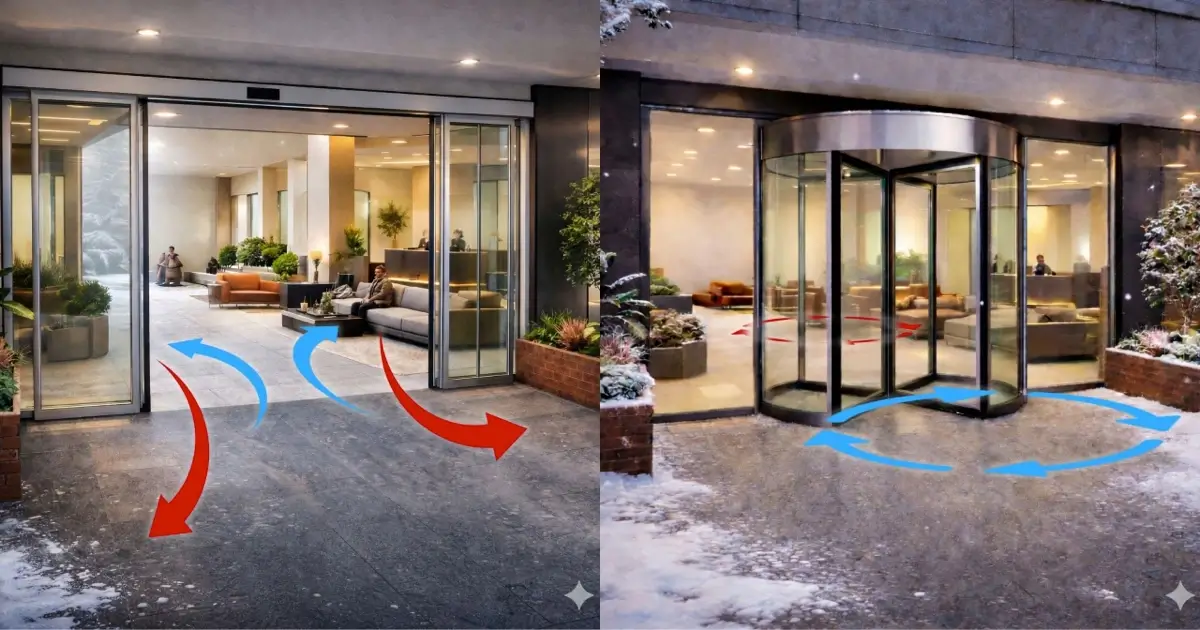
Revolving door energy savings can result from limiting uncontrolled air exchange at a building entrance. Reducing the movement of heated or cooled indoor air to the outside can help lower the energy needed to maintain indoor conditions.
For busy hotels, offices and shopping malls, the entrance is an important part of the building’s energy assessment. However, the size of the benefit depends on more than the door type. Climate, pedestrian traffic, dimensions, maintenance and the use of adjacent entrances all influence the result.
A useful assessment starts with understanding how the door works and examining the complete entrance under realistic operating conditions.
How Does a Revolving Door Limit Air Exchange?
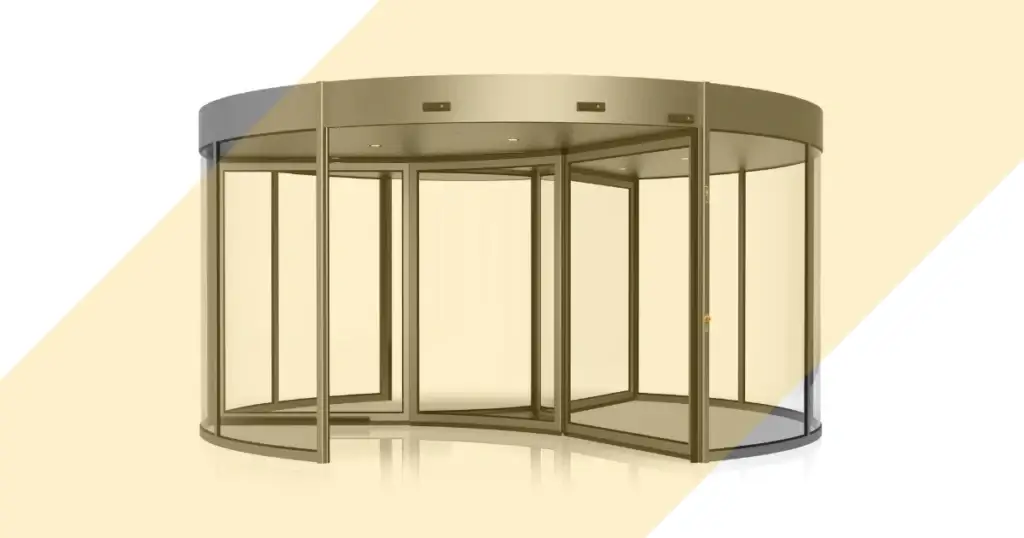
A revolving door uses wings rotating around a central axis within an outer enclosure. The resulting compartments allow people to pass while limiting the direct connection between indoors and outdoors during normal operation.
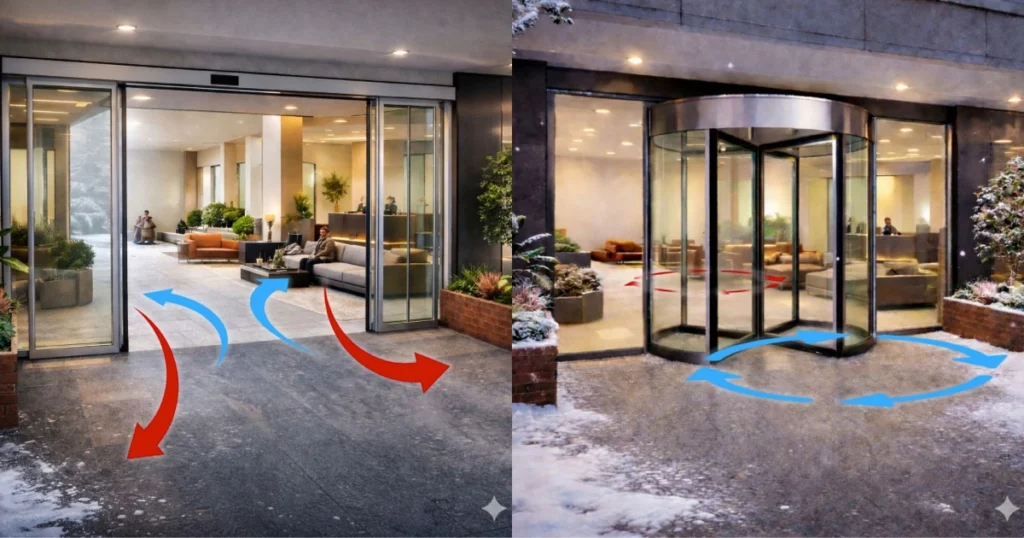
When a conventional external door remains open, temperature and pressure differences can drive air movement through the opening. The compartment arrangement of a revolving door helps control this exchange while pedestrian movement continues.
However, a revolving door is not completely airtight. Air carried through the compartments, operating clearances and the condition of sealing components all affect performance. Product selection, installation and maintenance therefore contribute to the energy outcome.
Why Can Heating and Cooling Loads Decrease?
Limiting Cold Air Entry in Winter
Cold outdoor air entering a heated building must be brought closer to the required indoor temperature. Greater uncontrolled air exchange can increase the energy needed to maintain that temperature.
By limiting entrance-related air exchange, a revolving door can help reduce the heating load. Where reception desks and waiting areas are close to the entrance, reduced air movement may also support occupant comfort.
Managing Warm and Humid Air in Summer
Warm outdoor air entering a cooled building adds heat that the cooling system must remove. In humid climates, removing moisture from incoming air can create an additional load.
Controlling air exchange can therefore matter during the cooling season as well. The potential benefit depends on outdoor temperature and humidity, together with the building’s indoor requirements.
Supporting More Stable Entrance Conditions
Reducing sudden air movement can help create more stable conditions near the entrance. However, improved comfort and reduced energy consumption are different outcomes.
A lobby that feels more comfortable does not, by itself, demonstrate a specific energy saving. Energy performance should be assessed through suitable calculations or consumption data.
Six Factors That Influence Revolving Door Energy Savings
1. Climate and Indoor-Outdoor Conditions
The difference between outdoor conditions and the indoor target affects how much incoming air must be heated, cooled or dehumidified.
A hotel in a cold climate will not have the same potential benefit as an office in a mild location. An annual assessment should consider the building’s full operating year rather than a single season.
2. Pedestrian Traffic and Operating Hours
An entrance used for a few hours each day differs from one serving steady traffic over extended hours.
The assessment should establish how long the existing entrance remains open, which doors visitors use and how the proposed revolving door will operate. Traffic volume alone does not determine a saving percentage; the behavior of the comparison entrance also matters.
3. Door Geometry and Selection
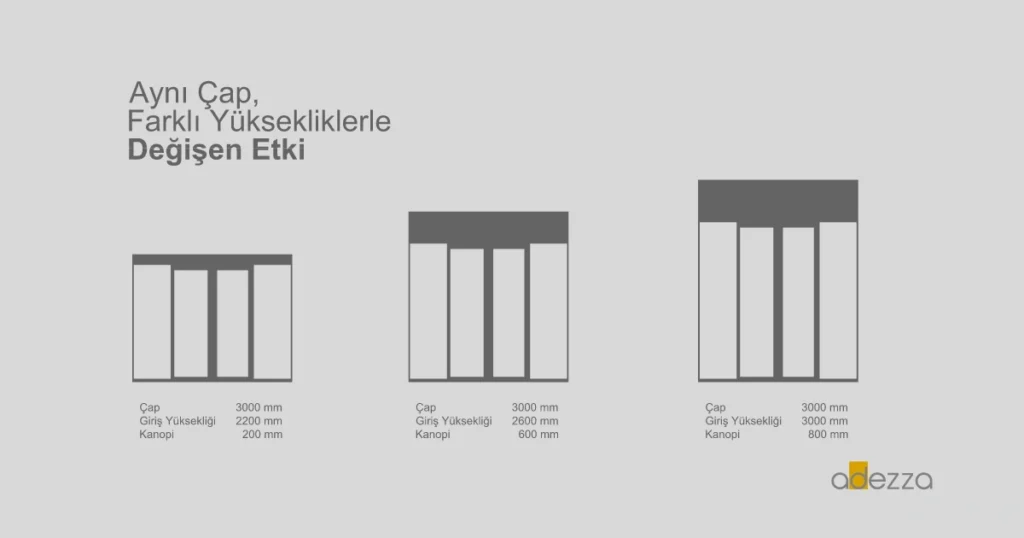
Diameter, wing configuration, height and operating clearances can influence both usability and air exchange.
The door should accommodate the expected pedestrian demand. An undersized entrance may encourage people to use adjacent doors, while a larger model does not automatically deliver better energy performance.
When reviewing automatic revolving door options, traffic requirements and entrance conditions should be considered together.
4. Wind and Building Pressure
Exposure to prevailing winds and pressure differences between indoors and outdoors can affect air movement at the entrance. Vertical air movement within taller buildings may also influence conditions at ground level.
Replacing the entrance door alone may therefore leave some air movement problems unresolved. Where necessary, the building’s mechanical air balance and facade conditions should be reviewed alongside the door design.
5. Installation and Sealing Components
Incorrect clearances, worn brushes or poorly coordinated building connections can reduce the expected performance.
Maintenance should include checks of door movement, sealing components and floor interfaces. Inspections and replacements should follow the manufacturer’s maintenance instructions.
The energy assessment should reflect the condition in which the entrance will actually operate, rather than assuming that installation quality and component condition remain unchanged indefinitely.
6. Use of Adjacent Doors
An adjacent door left open for extended periods can increase air exchange across the entrance as a whole. An assessment focused only on the revolving door would miss this effect.
Accessible access, service routes and emergency exit requirements must remain part of the entrance plan. Energy objectives should not depend on restricting alternative access needed by building users.
How Should the Door’s Electricity Consumption Be Included?
Automatic revolving doors use electricity for their drive mechanisms, controls and lighting. Air curtains and other auxiliary equipment, where fitted, must also be included.
A net energy assessment compares two scenarios: the existing or reference entrance arrangement and the proposed revolving door arrangement. Each scenario should include both entrance-related heating and cooling energy and the consumption of associated equipment.
A reduction in heating load does not translate directly into an identical reduction in electricity or fuel use. Boiler, heat pump and cooling system efficiency must also be considered.
For a cost comparison, electricity and fuel should be priced separately using the relevant tariffs. This distinguishes an energy saving from a financial saving, which can change as energy prices change.
Does an Air Curtain Increase Energy Savings?
In suitable applications, an air curtain can help manage airflow and support comfort near the entrance. Adding one does not automatically guarantee a net reduction in energy use.
When assessing air curtain solutions, include fan electricity, any heating energy, operating hours and control settings. Equipment that runs unnecessarily or is poorly matched to the entrance can reduce the anticipated benefit.
Selection should be coordinated with the door geometry and the building’s heating and cooling arrangements. The intended comfort benefit and the expected energy outcome should both be evaluated.
How Can Energy Savings Be Verified?
There is no universal percentage for revolving door energy savings. For example, MIT’s assessment of a campus building illustrates the relevance of entrance use to energy consumption, but its findings cannot be transferred directly to other properties.
A project assessment can draw on:
- Local climate data and required indoor conditions.
- Door operating hours and pedestrian counts.
- Opening durations for the existing entrance.
- Performance information for the proposed door.
- Heating and cooling system efficiency.
- Door and auxiliary equipment energy consumption.
If consumption before and after installation is compared, changes in weather, occupancy and operating hours should be accounted for. Otherwise, a milder winter or reduced building use could be mistaken for an improvement caused by the entrance.
Entrance-related savings should also be distinguished from whole-building savings. A substantial reduction in one source of heating demand does not represent the same percentage reduction in the building’s total energy consumption.
Plan an Entrance Around Real Operating Conditions
Revolving door energy savings are supported by suitable product selection, correct installation, regular maintenance and an operating arrangement that fits the building.
Share your entrance dimensions, building use and project conditions with Adezza’s team to explore door options that can inform a project-specific energy assessment.