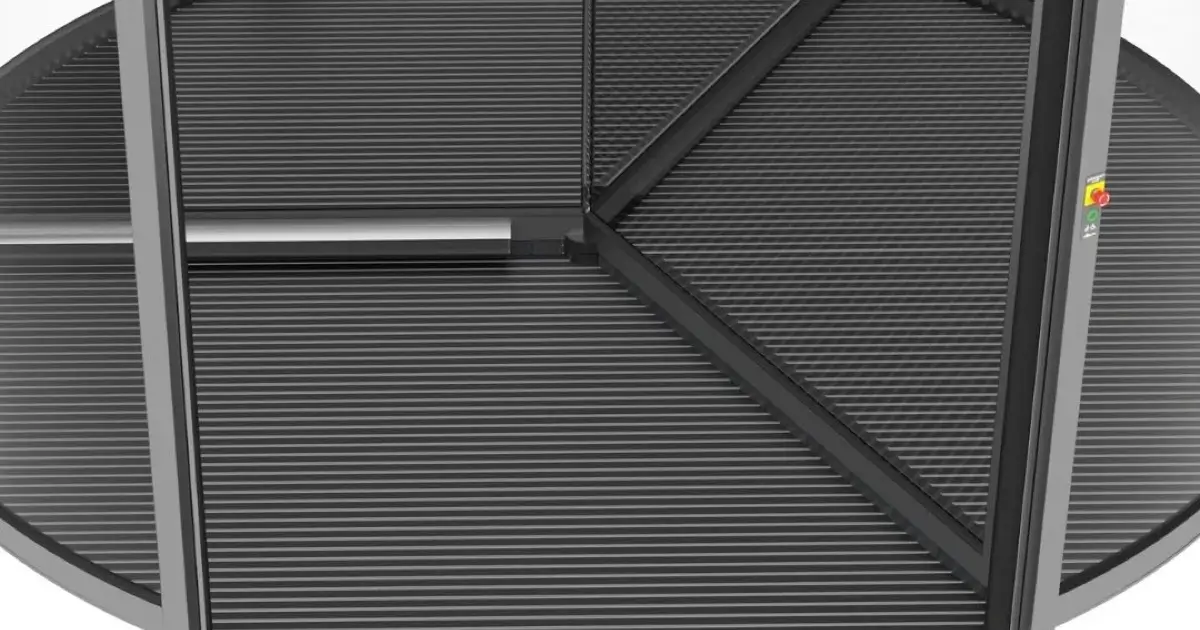
Aluminum mats for revolving doors help capture dirt and moisture carried into a building on footwear. For hotels, shopping centers, offices and other busy properties, choosing suitable entrance matting is an important part of cleaning, floor care and entrance presentation.
While the revolving door manages pedestrian passage, the matting performs a complementary role at floor level. Its dimensions, surface materials and position should therefore be considered alongside the door design. Appearance is only one consideration: the system also needs to suit visitor traffic, weather exposure and the building’s maintenance routine.
What Is an Aluminum Entrance Mat System?
An aluminum entrance mat consists of supporting profiles fitted with cleaning inserts. Depending on the insert material, the surface helps remove coarse dirt or retain fine dust and moisture from footwear.
Adezza’s aluminum mat systems include PVC, carpet and combined PVC-and-carpet options. PVC inserts provide a surface for removing coarse dirt, while carpet inserts help retain moisture and fine dust.
In a recessed installation, the mat sits within a prepared area in the floor. The installation should provide stable support and a suitable transition between the mat and the surrounding finished flooring. Dimensions must be coordinated with the selected product and its installation details.
The Benefits of Aluminum Mats for Revolving Doors
1. Help Reduce Dirt and Moisture Tracked Indoors
Visitors can carry dust, sand, mud and rainwater on their shoes. Without an adequate cleaning area at the entrance, these materials can spread into reception areas and circulation routes.
Positioning the mat along the natural walking route helps capture some of this contamination before it travels farther into the building. Effective planning considers the number of steps visitors can take on the mat, as well as the width of the entrance.
An exposed hotel entrance, for example, may face different conditions from a sheltered office doorway. The insert material should reflect the dirt and moisture the entrance is likely to receive.
2. Support Interior Floor Care
Sand and small particles carried on footwear can contribute to wear on some floor finishes under pedestrian traffic. Capturing these particles near the entrance supports the care of interior flooring.
This is particularly relevant in hotel lobbies and corporate reception areas, where the condition of the floor contributes to visitors’ first impressions. Entrance matting should form part of the building’s wider floor maintenance plan.
The benefit will vary with the flooring material, visitor numbers, external conditions and cleaning practices. A single maintenance saving should not be assumed for every building.
3. Contribute to Moisture Management
Rainwater can leave wet footprints or patches on entrance floors. Suitable carpet inserts help retain some of the moisture carried on shoes and can support the management of wet entrance areas.
However, a mat does not eliminate slipping hazards. A saturated, dirty or displaced mat may no longer perform as intended. The condition of the surrounding flooring also needs attention.
During periods of heavy rain, operators should inspect the mat and adjacent floor more frequently and carry out appropriate cleaning, drying and other operational measures.
4. Help Concentrate Cleaning at the Entrance
Once dirt spreads through a building, a larger area requires cleaning. Capturing it near the entrance helps cleaning teams manage where contamination accumulates.
Aluminum matting still requires regular maintenance. Both the cleaning surfaces and the area beneath the mat need attention. Providing practical access during the design stage makes these tasks easier once the building is in use.
Cleaning schedules should take account of visitor traffic, nearby sources of dust and seasonal conditions. Routine inspections are also useful because actual soiling may change faster than a fixed maintenance schedule anticipates.
5. Create a Coordinated Entrance Appearance
The mat frame, cleaning surface and junction with the surrounding floor are visible elements of an entrance. A well-dimensioned installation creates an orderly transition between the door and the interior flooring.
When specifying aluminum mats for revolving doors, designers should consider the circular door geometry alongside the route visitors follow. Matting may be positioned within the door area, in front of it or along the adjoining entrance route, depending on the project.
Coordinating the floor detail with the selection of an automatic revolving door makes it easier to check the relationship between door movement, finished floor levels and mat placement.
Choosing PVC, Carpet or Combined Inserts
Start by identifying the main cleaning requirement at the entrance:
- Entrances exposed to coarse dirt: Consider PVC inserts.
- Interior entrance areas receiving moisture and fine dust: Consider carpet inserts.
- Entrances with several cleaning requirements: Assess combined PVC-and-carpet options.
The final choice should reflect weather exposure, maintenance resources and pedestrian traffic. Where space allows, a sequence of cleaning zones may also be considered, with different surfaces addressing different types of contamination.
For example, a project may require an initial area for removing coarse dirt followed by an area that helps retain moisture. The available walking distance and the way visitors actually use the entrance should guide the layout.
What Should Be Checked Before Installation?
Specifying a mat involves more than selecting its width and length. The supporting floor, frame, surrounding finish and door movement must be considered together.
Adezza lists a total mat height of 22 mm for its system. This dimension should not automatically be treated as the required recess depth. The complete installation section, including the frame and mounting arrangement, must be checked before preparing the floor.
The design review should also address:
- Even and adequate support beneath the mat.
- Secure positioning without lifting edges or movement.
- Compatibility with door leaves and lower sealing elements.
- Access for cleaning beneath the mat.
- Use by people with luggage, strollers or service trolleys.
- Suitable drainage details where external water exposure requires them.
Suitability for wheeled equipment cannot be determined from the use of aluminum profiles alone. The product’s load capacity, profile spacing and installation method should be verified for the intended application.
Matting should also be coordinated across the entrance routes people actually use, including any adjacent doors. This helps avoid a layout in which a significant proportion of visitors bypasses the cleaning area.
Plan a Matting Solution Around Your Entrance
Selecting aluminum mats for revolving doors is part of coordinating the door, floor and maintenance requirements of a building. Appropriate inserts, suitable dimensions and regular cleaning help establish a more manageable entrance cleaning routine.
For a new project or an entrance refurbishment, share your door dimensions, floor details and operating requirements with Adezza’s team to discuss a suitable solution.