Aluminum Entrance Mat Sizes and Types: A Selection Guide for Commercial Entrances
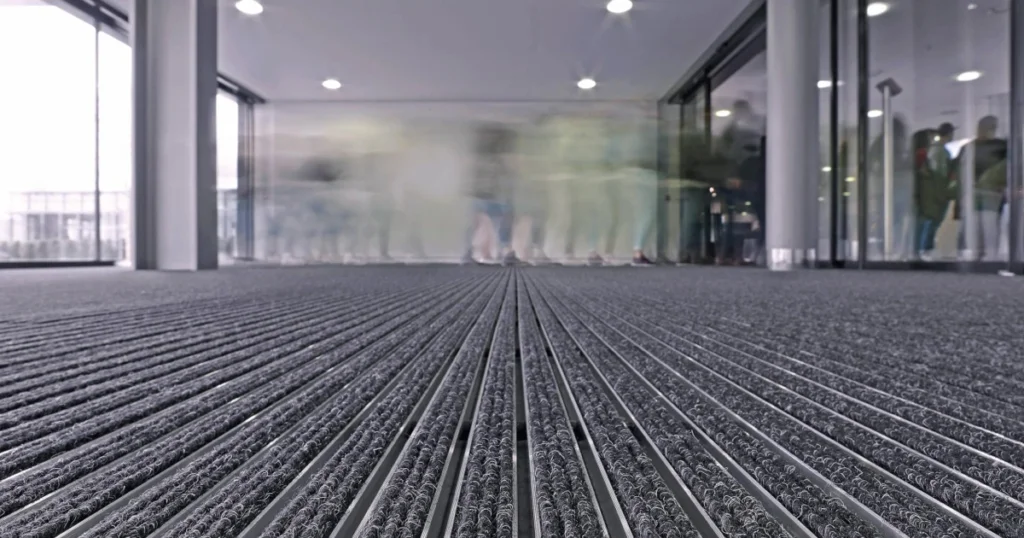
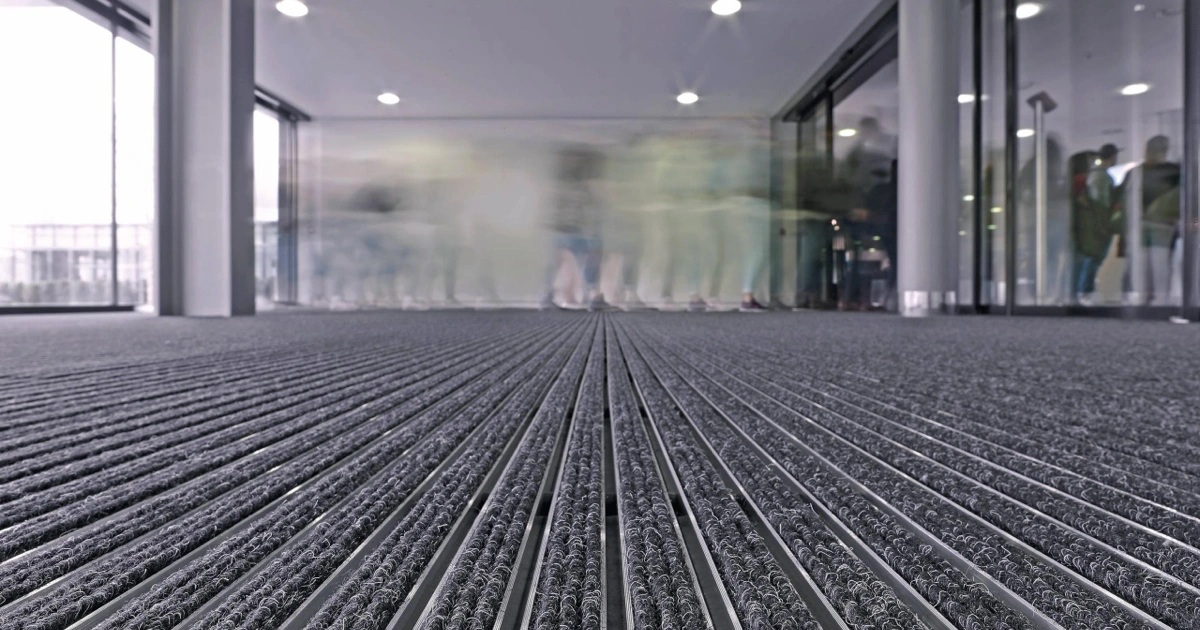
Aluminum entrance mats are professional flooring systems designed to help remove dirt and retain moisture carried into buildings on footwear. Commonly installed in hotels, shopping malls, office buildings and other commercial properties, they combine structural aluminum profiles with cleaning inserts selected for different entrance conditions.
However, choosing the right aluminum mat involves more than selecting an attractive surface. Mat width, walking length, overall height, insert material and installation method all influence how effectively the system serves its intended purpose.
For architects and contractors, aluminum mat dimensions are particularly important because entrance matting often needs to be coordinated with finished floor levels, door movement and structural details.
This guide explains how aluminum entrance mat sizes are determined, the differences between PVC and carpet inserts, and what to consider when specifying a system for a commercial building.
What Are Aluminum Entrance Mats?
An aluminum entrance mat is a modular floor system consisting of supporting aluminum profiles fitted with cleaning inserts.
Depending on the selected surface material, the inserts help remove coarse dirt from footwear or retain some of the moisture and fine dust carried into a building.
Unlike a loose textile mat, an architectural aluminum entrance mat can be incorporated into a prepared floor recess, creating a coordinated transition between the entrance and the surrounding flooring.
Adezza’s Aluminum Mat Systems include PVC, carpet and combined PVC-and-carpet configurations for medium- and high-traffic commercial entrances.
The appropriate configuration depends on pedestrian activity, outdoor exposure and the maintenance requirements of the building.
How Are Aluminum Entrance Mat Dimensions Determined?
Aluminum entrance mat dimensions should be based on the actual pedestrian route rather than the doorway width alone.
Three measurements are particularly important: mat width, length in the direction of travel and overall system height.
Aluminum Mat Width
Mat width determines how much of the entrance route is covered across the direction of pedestrian movement.
For example, consider a commercial entrance with a structural doorway width of 2400 mm. Matching that dimension exactly may seem reasonable, but people may spread out to either side immediately after passing through the door.
If the mat covers only a narrow central area, some visitors may bypass the cleaning surface.
A suitable width should therefore account for the usable doorway opening, expected walking paths and the position of adjacent walls or circulation routes.
The final manufacturing dimension must also accommodate any frame, perimeter detailing and installation clearances required by the selected system.
Aluminum Mat Length
Mat length describes the distance available for walking across the cleaning surface.
This dimension has a direct relationship with how many footsteps are likely to make contact with the mat.
A short entrance mat may offer limited opportunity for removing dirt or retaining moisture, particularly when visitors move quickly through the entrance.
A longer cleaning area can provide additional contact between footwear and the selected inserts.
However, there is no single mat length that will suit every project.
A shopping mall entrance exposed to rain and heavy pedestrian movement may require a different arrangement from a sheltered office entrance with lower visitor traffic.
The available floor area, expected contamination and pedestrian behaviour should guide the final decision.
Aluminum Mat Height and Thickness
Overall height is an important technical specification, especially for recessed entrance mat installations.
Adezza’s published product information identifies a total mat height of 22 mm for its aluminum mat system.
This value describes the published product height. It should not automatically be interpreted as the required depth of the prepared floor recess.
Frames, supporting components, fixing methods and the surrounding floor construction may affect the installation section.
Architects should therefore verify the complete product and frame detail before establishing the final recess depth.
What Types of Aluminum Entrance Mats Are Available?
Aluminum entrance mats are commonly distinguished by their cleaning inserts.
Adezza’s product range includes PVC inserts, carpet-based inserts and combined systems that use both materials.
PVC Insert Aluminum Mats
PVC insert mats are designed primarily to help remove coarse dirt from footwear.
They can be considered for entrance areas exposed to mud, sand and other outdoor debris.
Adezza’s outdoor PVC mat configuration uses flexible PVC inserts positioned within durable aluminum profiles.
This type of surface may be useful near exterior entrance points where removing coarse dirt is a priority.
However, suitability for outdoor use should be confirmed for the complete product and installation, not inferred from the insert material alone.
Carpet Insert Aluminum Mats
Carpet insert mats help retain finer dust particles and moisture carried on footwear.
They are often considered for hotel lobbies, office entrances and other interior transition areas.
Adezza publishes carpet-based configurations, including carpet-over-profile inserts and an indoor carpet mat arrangement with a steel base.
The selected carpet surface should reflect the expected pedestrian traffic, moisture exposure and maintenance routine.
During wet weather, carpet inserts may become saturated and require additional cleaning or drying.
Combined PVC and Carpet Mats
Combined aluminum entrance mats incorporate PVC and carpet cleaning surfaces within the same system.
The two materials perform complementary functions.
PVC inserts help remove coarse dirt, while carpet inserts contribute to fine dust and moisture retention.
Combined systems can be evaluated for commercial entrances where both requirements are significant.
The arrangement and proportion of the insert materials should be selected according to the actual entrance conditions.
PVC vs Carpet vs Combined Aluminum Mats
| Feature | PVC Inserts | Carpet Inserts | Combined System |
|---|---|---|---|
| Main function | Removing coarse dirt | Retaining moisture and fine dust | Combining both functions |
| Typical location | Exterior or exposed entrance areas | Interior transition and lobby areas | Entrances with mixed cleaning requirements |
| Surface material | Flexible PVC | Carpet | PVC and carpet |
| Maintenance focus | Removal of accumulated debris | Cleaning and moisture management | Both cleaning requirements |
| Selection factor | Outdoor dirt exposure | Indoor moisture and fine dust | Overall entrance conditions |
These are general application distinctions rather than universal performance ratings.
The effectiveness and suitability of a complete entrance mat also depend on its supporting structure, profile arrangement and installation conditions.
How Are Aluminum Entrance Mats Installed?
Installation method has a direct influence on the required dimensions and the finished floor transition.
Recessed Aluminum Entrance Mats
Recessed installation involves positioning the mat within a prepared area of the floor.
The intention is generally to create a stable walking surface with a suitable transition to the surrounding finished flooring.
The floor recess must be coordinated with the mat dimensions, perimeter frame and supporting construction.
For an Adezza system with a published total height of 22 mm, the complete installation drawing must be reviewed before determining the recess depth.
The prepared base should provide suitable support across the mat area. Uneven support can lead to movement, instability or damage during use.
Access for removing the mat and cleaning the underlying recess should also be considered.
Surface-Mounted Aluminum Mats
Some entrance mat systems can be installed above the existing floor surface where recessing is not possible.
This approach may be considered during refurbishment projects or in buildings where altering the floor structure is impractical.
Surface-mounted arrangements require particular attention to exposed edges and changes in floor level.
The suitability of transitions for pedestrians, wheelchair users, luggage and wheeled equipment should be assessed.
Not every mat configuration is designed for surface installation. Product-specific technical requirements must be checked before selecting this method.
How to Measure an Entrance for Aluminum Matting
Accurate site measurements help prevent installation problems and unnecessary modifications.
The measurements should reflect the finished building conditions, not only preliminary structural dimensions.
A project survey should establish the usable entrance width, available walking length, finished floor level, proposed installation method and any special edge geometry.
The designer should also consider whether the mat needs a straight perimeter or a custom shape.
For example, a curved entrance or a floor area adjoining a revolving door may require more detailed geometric coordination than a rectangular lobby entrance.
For replacement projects, measuring only the old mat may be insufficient. The actual recess, frame condition, corner geometry and underlying floor should also be inspected.
Where modular sections are proposed, the joints and support arrangement must be suitable for the intended pedestrian and equipment loads.
Aluminum Matting for Revolving Door Entrances
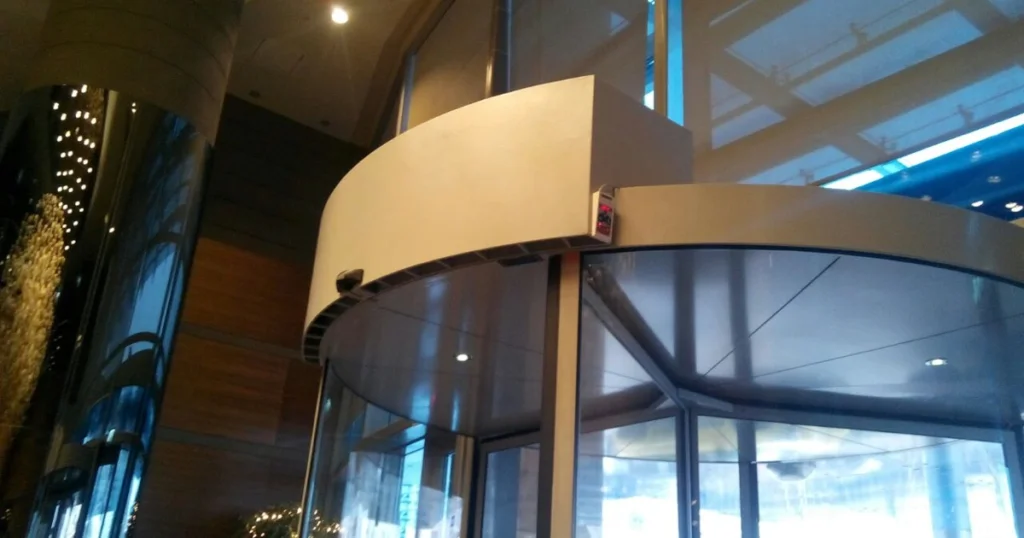
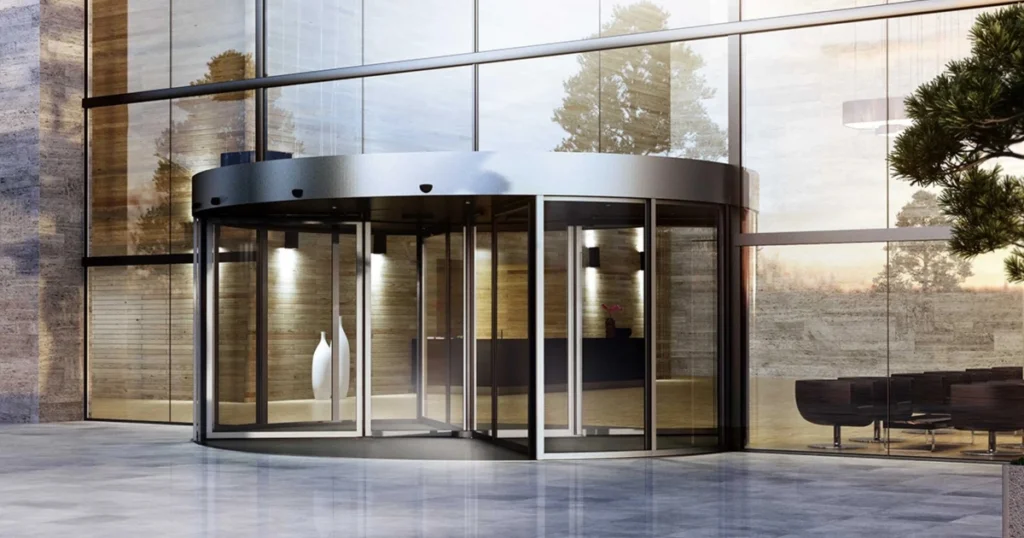
Revolving door entrances require additional coordination because of the rotating wings and circular enclosure.
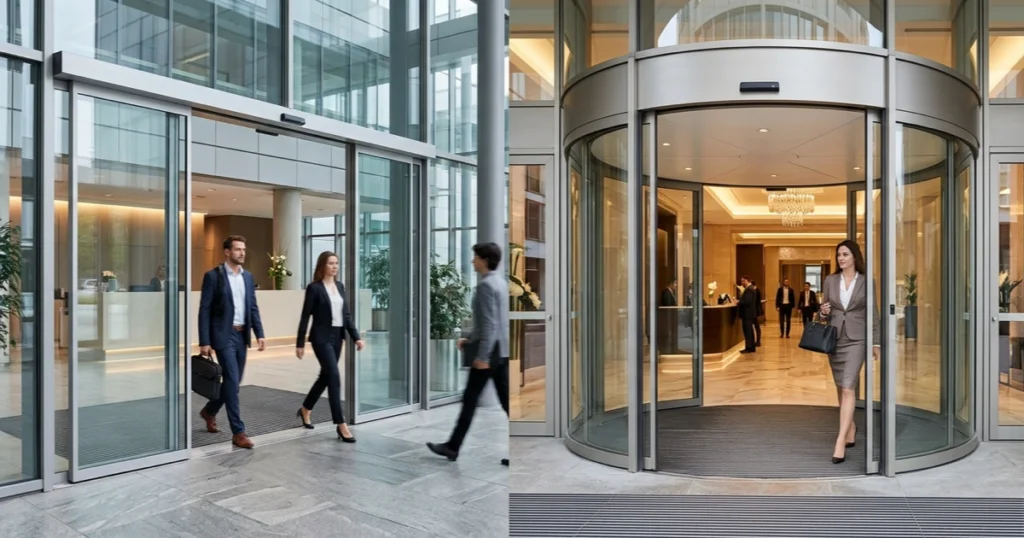
Depending on the project, matting may be positioned inside the revolving door, immediately in front of it or along the adjoining pedestrian route.
The selected arrangement should not interfere with moving components, lower wing clearances, floor rings or sealing elements.
It is also important to consider whether visitors will follow the intended cleaning route or pass around the mat.
For a detailed explanation of this application, see Aluminum Mats for Revolving Doors: 5 Key Benefits.
The matting and automatic revolving door should be reviewed together during the entrance design process.
Choosing Aluminum Mat Sizes for Different Buildings
Different commercial entrances require different mat dimensions and insert combinations.
Hotels and Hospitality Buildings
Hotel entrances often accommodate guests with luggage, groups arriving together and varying levels of pedestrian traffic.
The selected mat should support comfortable walking and suit the surrounding lobby flooring.
Compatibility with luggage wheels is particularly important. The load capacity, profile spacing and stability of the installed mat should be verified for the intended use.
Carpet and combined insert arrangements may be considered depending on moisture exposure and cleaning requirements.
Shopping Centres
Shopping centres can experience substantial pedestrian movement and frequent exposure to dirt or moisture.
The mat width should reflect the full walking route rather than a narrow section directly in front of the doorway.
Large installations may use multiple modules, provided that joints and support arrangements are appropriate.
Actual traffic volume and maintenance access should influence the specification.
Office Buildings
Office entrances often require a balance between practical cleaning performance and architectural appearance.
Aluminum profiles and insert finishes can be coordinated with surrounding stone, tile or other floor materials.
The matting should also be easy to maintain without disrupting normal building access.
Healthcare and Public Buildings
Healthcare and public entrances require careful consideration of users with different mobility needs.
Wheelchairs, stretchers, strollers and service trolleys can place specific demands on the entrance floor.
A mat should not be assumed suitable for every wheeled application solely because it uses aluminum profiles.
Support, load capacity, profile spacing, floor transitions and applicable accessibility requirements must be reviewed.
Common Mistakes When Choosing Aluminum Entrance Mat Dimensions
One common mistake is sizing a mat only to the width of the door.
If the walking route extends beyond the mat, a significant proportion of visitors may not benefit from the cleaning area.
Another mistake is treating published mat height as the required recess depth without checking the installation section.
An incorrect floor detail can create uneven transitions or require changes during construction.
Selecting inserts based only on appearance can also reduce the usefulness of the system. A surface that looks appropriate for an interior lobby may not be the best choice for an entrance exposed to mud and rain.
Maintenance is another consideration that should be addressed early. A mat that cannot be removed or cleaned conveniently may become difficult to manage during normal building operation.
Maintenance Requirements for Aluminum Entrance Mats
Aluminum entrance mats require regular cleaning to maintain their intended performance.
Coarse debris should be removed from PVC surfaces, while carpet inserts need suitable cleaning and moisture management.
In recessed installations, dirt and moisture may also accumulate beneath the mat.
Cleaning methods should follow the product’s instructions and be compatible with the selected insert materials.
Heavy rainfall and increased pedestrian traffic may require more frequent inspections.
Damaged inserts, loose modules or unstable edges should be assessed and corrected as appropriate.
Regular maintenance helps preserve the entrance’s appearance and supports the continued effectiveness of the cleaning surfaces.
Choosing Adezza Aluminum Mat Systems for Your Project
Adezza provides aluminum mat systems for different commercial entrance arrangements.
Its published specifications include a 22 mm total mat height, high-strength supporting aluminum profiles and PVC, carpet and combined insert options.
The appropriate mat should be selected using the entrance dimensions, pedestrian traffic, exposure conditions and installation requirements.
For new buildings, coordinating matting with the floor and door details at an early stage can reduce construction changes.
For refurbishment projects, an accurate site survey is equally important.
Explore Adezza Aluminum Mat Systems for product information and technical documentation, or contact the Adezza team with your entrance dimensions and floor details for a project-specific assessment.