What Is an Air Curtain? How to Choose the Right Air Curtain for an Entrance
An air curtain is a fan-powered system that creates a directed stream of air across a doorway to help reduce unwanted air exchange between two environments. It is commonly used at commercial building entrances where frequent door openings can affect indoor temperature, occupant comfort and heating or cooling demand.
Choosing the right entrance air curtain involves more than selecting a unit with a high airflow rating. Door width, mounting height, air velocity, outdoor exposure and the building’s pressure conditions all influence its effectiveness.
A properly specified system can support more comfortable entrance conditions and reduce unnecessary air movement. An incorrectly sized or installed air curtain, however, may consume energy without providing the intended separation.
This guide explains how air curtains work, the different types available and the technical factors that should be considered when choosing equipment for a commercial entrance.
What Is an Air Curtain?
An air curtain is a mechanical device that uses fans to produce a concentrated airflow across an opening.
When installed horizontally above an entrance, the unit generally directs air downward towards the floor. Vertical systems can be installed beside an opening and discharge air horizontally.
The airflow is intended to reduce uncontrolled air movement between adjacent environments. For example, an entrance air curtain may help limit the exchange between cold outdoor air and heated indoor air during winter.
Unlike a physical door, an air curtain does not close the opening. People can pass through the air stream while the equipment continues operating.
However, the system does not create a perfectly airtight barrier. Its performance depends on the characteristics of the airflow and the conditions surrounding the entrance.
An air curtain should not be considered a substitute for a physical door, general ventilation or an air filtration system.
How Does an Air Curtain Work?
Air curtains operate by drawing air into the unit and discharging it through a designed outlet at a controlled velocity and direction.
The fan system generates an air stream that crosses the opening. If the airflow is properly distributed and sufficiently effective at the relevant distance, it can help reduce unwanted air exchange.
Consider a retail entrance that opens frequently during cold weather. Without suitable entrance management, outdoor air may move into the building whenever the door is open. An appropriately selected air curtain can reduce some of this movement and support more stable conditions near the entrance.
The same principle applies in summer, when air-conditioned indoor spaces are exposed to warmer outdoor conditions.
Successful operation depends on the interaction between air velocity, airflow distribution, doorway dimensions and external environmental forces.
A more powerful fan is not automatically the best solution. The system must deliver the right airflow to the required area without creating unnecessary draughts or energy consumption.
What Are the Different Types of Air Curtains?
Air curtains can be categorised by their heating arrangement and installation configuration.
Unheated Air Curtains
Unheated air curtains use fan-generated airflow without adding heat through an internal heating element.
They are suitable for applications where the main objective is air separation rather than local heating.
Although these systems do not use electric heating elements, their motors and controls still consume electricity.
Unheated operation can also be an available mode on some heated air curtain models.
Electric Heated Air Curtains
Electric heated air curtains incorporate heating elements that warm the discharged airflow.
They can be considered for entrances where cold-weather comfort is an important requirement, particularly around reception desks, waiting areas or commercial lobbies.
The air stream’s separation performance should be assessed independently from its heating function. Higher discharge temperature alone does not ensure effective air separation.
Electrical infrastructure, heating capacity and overall operating costs must be considered during equipment selection.
Water Coil Air Curtains
Water coil air curtains use a heat exchanger connected to a building’s mechanical services.
Hot-water systems can supply heat to the discharge airflow. Some appropriately designed systems may also support cooling applications where the relevant equipment and water circuits are provided.
These installations require coordination with the building’s pipework, water flow conditions, controls and maintenance arrangements.
Adezza’s air curtain product range includes published technical data for electric heated and water coil configurations.
How to Choose an Air Curtain for a Doorway
The starting point for air curtain selection is an accurate understanding of the opening.
The unit must be capable of covering the required area under actual operating conditions. Airflow performance, mounting location and environmental exposure should be evaluated together.
1. Measure the Door Width
For a horizontally mounted unit, the effective air discharge should cover the full doorway width.
If the air stream does not adequately cover the sides of the opening, uncontrolled air movement may occur through the unprotected sections.
For example, a doorway measuring 1,600 mm wide should not be matched to an air curtain solely because the equipment housing appears approximately the same size.
The effective discharge width and the manufacturer’s installation recommendations must be checked.
For larger openings, a multiple-unit arrangement may be appropriate, provided the combined discharge pattern delivers suitable coverage.
2. Check the Mounting Height
Mounting height is one of the most important selection criteria.
For a horizontal installation, it generally refers to the distance between the air discharge outlet and the finished floor level.
As this distance increases, it becomes more challenging for the air stream to maintain the required characteristics across the opening.
Different air curtain models are designed for different installation heights.
Adezza’s published technical specifications identify a 3,500 mm door-height value for its listed Niva Life commercial electric heated models and a 3,000 mm value for its listed Niva Vito water coil models.
These figures apply to the specific product families shown in the technical documentation. They should not be treated as universal mounting-height limits for all air curtains.
The selected product must be assessed against the project’s actual installation height.
3. Compare Airflow Rate and Air Velocity
Airflow rate indicates the volume of air moved by the unit over a given period, commonly expressed in m³/h.
Air velocity describes the speed of the air stream and is generally expressed in m/s.
Both specifications are relevant, but neither provides a complete assessment on its own.
A high airflow rate does not guarantee that the air stream will remain effective at floor level or cover the full doorway uniformly.
Selection should consider discharge geometry, air distribution, the relevant operating distance and manufacturer performance data.
Comparing only the highest advertised airflow figure can result in an unsuitable choice.
4. Determine Whether Heating Is Required
The need for air separation should be considered separately from the need for additional heating.
An entrance may require a suitable airflow barrier without needing a heated discharge. Another application may benefit from warmed airflow during cold weather.
For buildings with central hot-water services, a water coil unit may be worth evaluating. An electric heated unit may be more appropriate where the electrical supply, operating requirements and installation constraints support it.
The final choice should include an assessment of equipment consumption, heating demand, control arrangements and overall running costs.
5. Evaluate Wind Exposure and Building Pressure
External conditions can strongly influence air curtain performance.
An entrance directly exposed to prevailing winds presents different challenges from a sheltered doorway.
Air movement can also be affected by pressure differences between indoor and outdoor spaces, mechanical ventilation systems and the building’s overall air leakage characteristics.
For example, powerful extraction systems or entrances on opposing sides of a building may increase airflow through open doors.
These conditions can disrupt the intended air stream even when the unit has been selected according to the doorway dimensions.
The orientation of the façade and the building’s ventilation arrangement should therefore be reviewed before specifying the final equipment.
6. Consider Door Usage and Controls
The frequency and duration of door opening affect how an entrance air curtain should operate.
A hotel entrance with intermittent visitor traffic may require a different control strategy from a retail entrance that remains open for extended periods.
Depending on the equipment, control options may include door-activated operation, adjustable fan speeds, heating settings and operating schedules.
Appropriate control configuration helps balance comfort and energy consumption.
How Should an Air Curtain Be Installed Above a Door?
Correct installation is essential for reliable performance.
A horizontal air curtain should be positioned according to the manufacturer’s installation requirements, with an unobstructed air intake and discharge path.
Architectural cladding, decorative ceiling panels or nearby structural elements should not interfere with the airflow.
The mounting arrangement must safely support the equipment and allow access for servicing.
Electric heated units require an appropriate electrical supply, while water coil systems also need suitable mechanical services connections and controls.
Installation should be coordinated with the entrance layout before the surrounding ceiling or façade finishes are finalised.
For specialised door arrangements, the equipment position may need to be reviewed together with the door manufacturer.
Can Air Curtains Be Used with Revolving Doors?
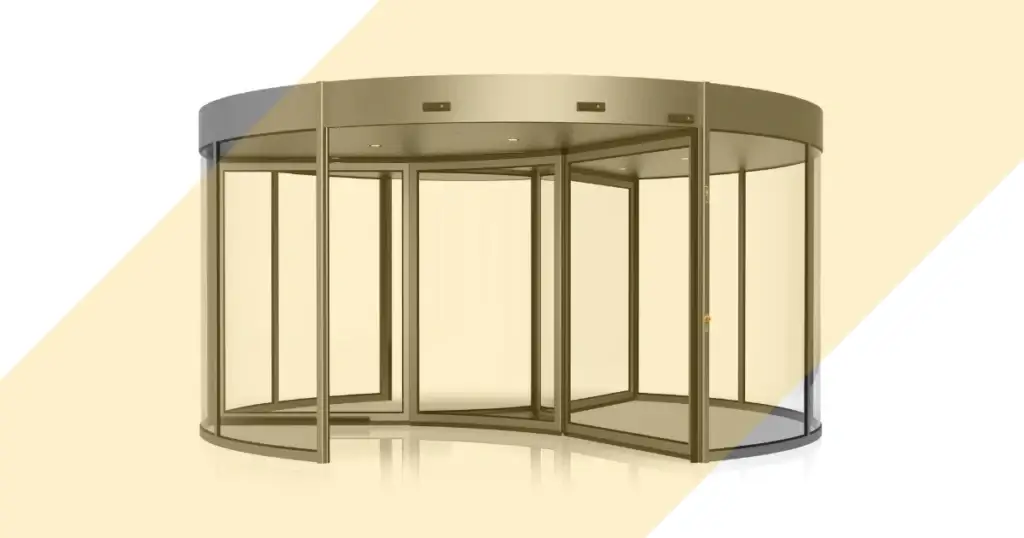
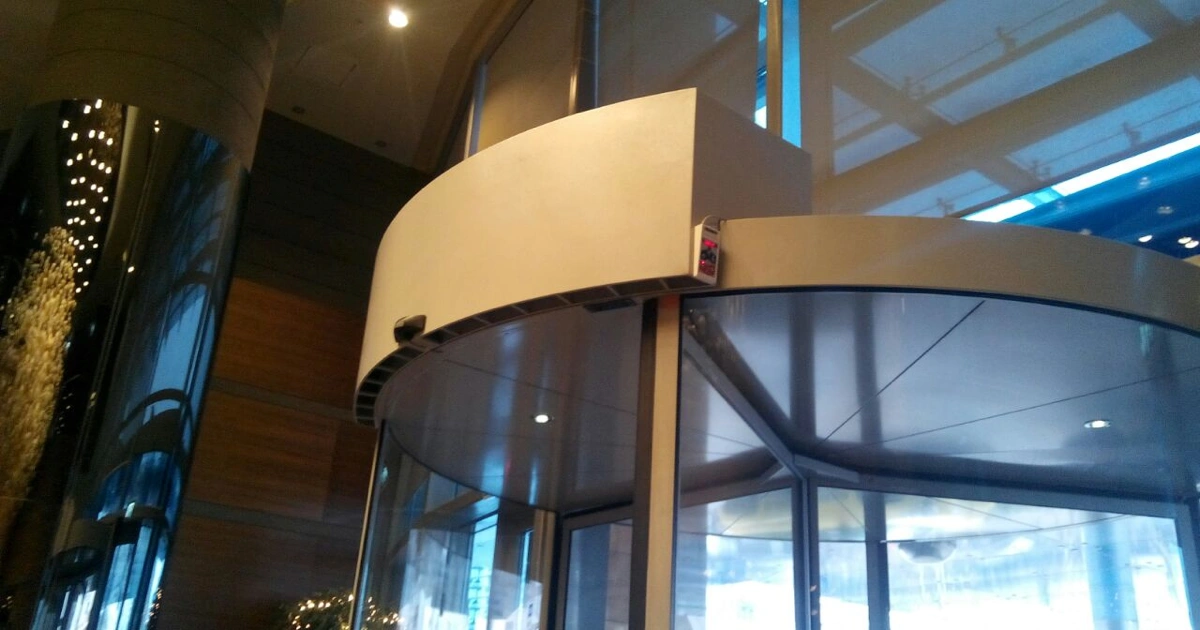
Yes. An air curtain can be integrated with a revolving door where the entrance design and project requirements support the arrangement.
A revolving door uses moving compartments to organise pedestrian passage and limit a continuously open connection between indoor and outdoor environments.
An air curtain provides a separate function by generating directed airflow in a selected entrance area.
Together, these systems may help manage local comfort conditions. However, not every revolving door requires an additional air curtain.
The need for one depends on climate, exposure, building pressure and the experience of people using or occupying the entrance.
For application-specific guidance, see Revolving Door Air Curtain: 6 Key Selection Criteria.
Where Are Air Curtains Used?
Air curtains are used in a variety of commercial and industrial environments where openings affect indoor operating conditions.
In retail buildings, frequent entrance use can increase unwanted air movement. Hotels may place particular importance on comfort near reception areas and lobby seating.
Office buildings often require attention to morning and evening pedestrian peaks, while healthcare facilities may have additional ventilation and environmental control requirements.
In healthcare applications, an air curtain should not be assumed to provide infection control or replace a properly engineered ventilation strategy.
Industrial entrances may require equipment designed for larger openings, more demanding environmental conditions and different operating patterns.
The most appropriate solution depends on the actual doorway rather than the building category alone.
Do Air Curtains Save Energy?
An appropriately designed air curtain can help reduce heating or cooling demand associated with uncontrolled air exchange at an entrance.
However, energy savings are not guaranteed and should not be expressed as a universal percentage.
The result depends on outdoor climate, operating hours, door usage, wind conditions, pressure differences and equipment settings.
The energy consumed by the air curtain itself must also be included in the assessment.
For example, selecting an unnecessarily powerful heated unit may increase consumption without providing a corresponding improvement in entrance performance.
A meaningful energy evaluation should consider the whole entrance arrangement and its actual operating conditions.
Air Curtain Solutions from Adezza
Adezza offers air curtain solutions that can be considered alongside revolving doors and other commercial entrance systems.
The available product information includes electric heated and water coil units, with specifications covering dimensions, airflow rate, discharge velocity, heating capacity and application height.
These details allow designers and project teams to compare equipment according to actual installation requirements.
Review the Adezza air curtain technical specifications or request a quotation by sharing your entrance dimensions, building use and mechanical services requirements.