Automatic door systems are motor-driven entrance solutions that allow people to enter and leave a building without manually opening the door. They are widely used in hotels, offices, shopping centres, healthcare facilities and other commercial buildings where accessibility, pedestrian flow and entrance performance matter.
Modern automatic doors can operate through motion detection, touchless activation, access control signals or other control arrangements. However, not every automatically opening door uses the same mechanism. Revolving doors, straight sliding doors and curved sliding doors differ in how they move, the space they require and the way they manage pedestrian passage.
For architects, contractors and facility managers, choosing the right automatic entrance involves understanding these differences rather than simply selecting a motorised door.
What Are Automatic Door Systems?
Automatic door systems use an electric drive and electronic control equipment to manage door movement. Depending on the design, an opening or movement command may come from a motion sensor, activation button, access control system or building management interface.
The control unit processes these signals and operates the motor according to the programmed settings.
A sensor-operated door is not necessarily a separate mechanical category. Sensors can be incorporated into different types of automatic doors, including sliding and revolving systems.
The distinction is important: the door mechanism determines how the entrance opens, while the detection and control equipment determines when and under what conditions it operates.
How Do Automatic Doors Work?
Automatic doors generally follow a controlled sequence involving activation, movement, detection and a return to the appropriate operating state.
Consider a sensor-operated sliding door at a commercial entrance. As a person approaches, the activation sensor sends a signal to the controller. The motor moves the door panels sideways to provide an opening. Detection equipment monitors the relevant passage area, and the door closes when the configured conditions are met.
An automatic revolving door behaves differently. Its motor controls the rotation of wings around a central axis. Users move through compartments created by the rotating wings and the stationary enclosure.
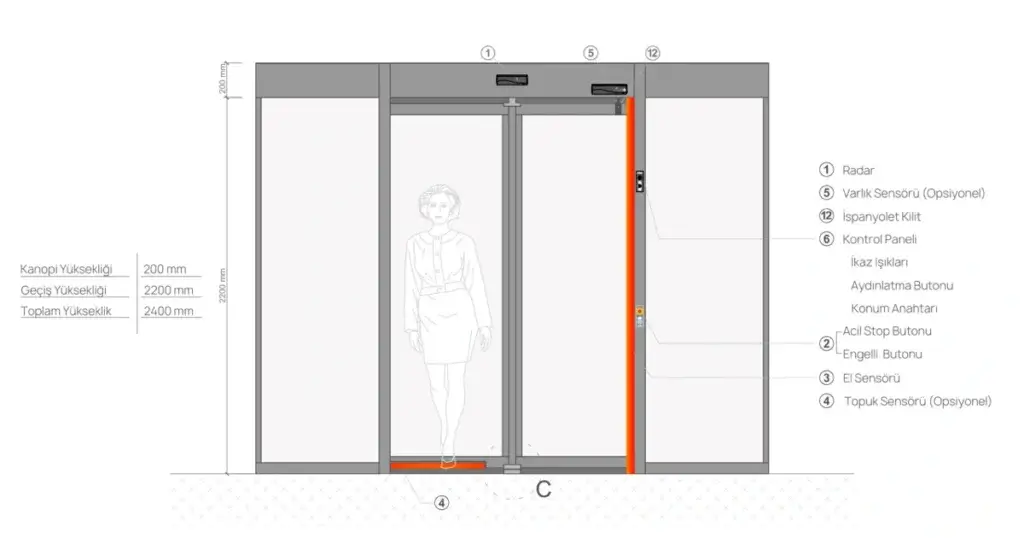
Although the operating principles differ, automatic door systems generally incorporate several essential components: a motor and drive mechanism, a control unit, activation devices, safety detection equipment and operating-mode controls.
The exact configuration varies by model. Some sensors and control functions may be standard equipment, while others are optional.
Main Types of Automatic Door Systems
The most appropriate automatic door type depends on the building’s entrance geometry, expected pedestrian traffic and operational requirements.
Automatic Revolving Doors
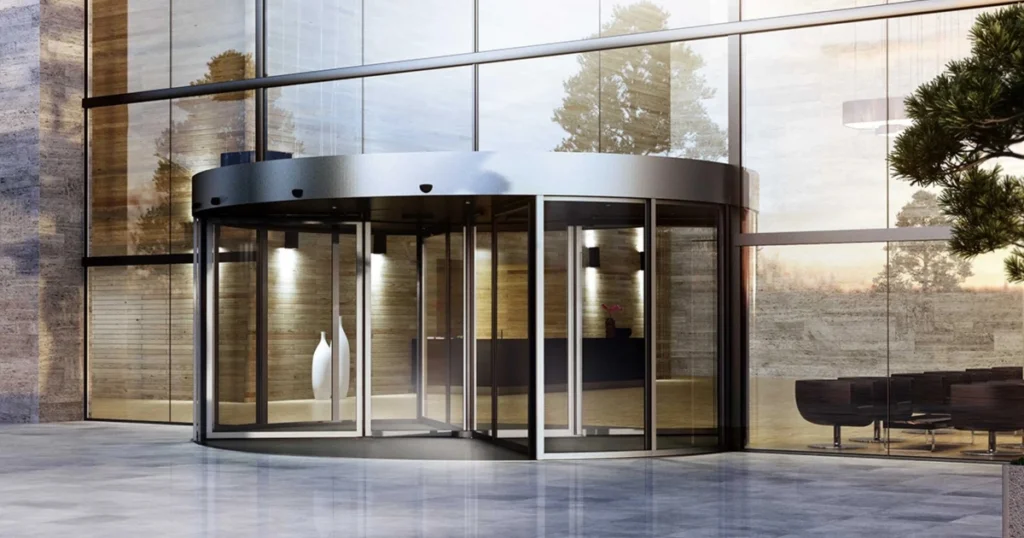
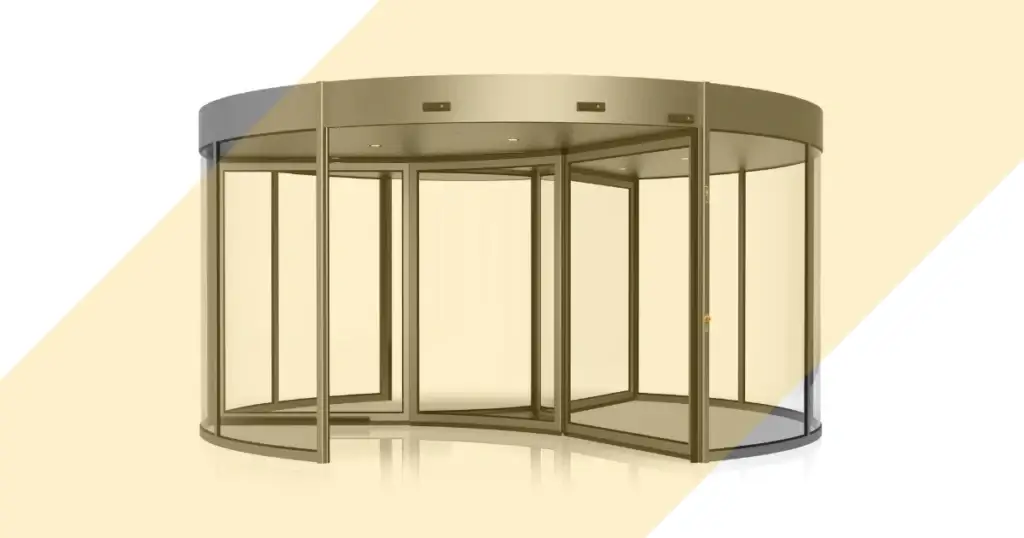
Automatic revolving doors feature wings rotating around a central axis within a stationary outer enclosure.
Instead of creating one continuously open entrance, the revolving wings form moving compartments through which pedestrians pass.
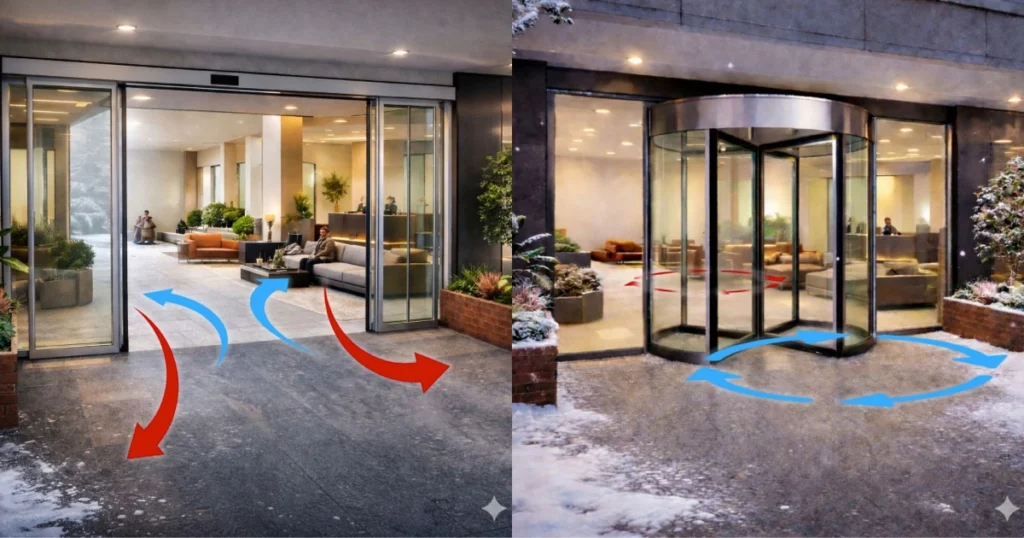
This arrangement can help limit direct air exchange between indoor and outdoor environments under suitable operating conditions. It also establishes an organised movement pattern through the building entrance.
Automatic revolving doors are often considered for hotels, corporate headquarters, shopping centres and commercial developments where entrance appearance and pedestrian management are important.
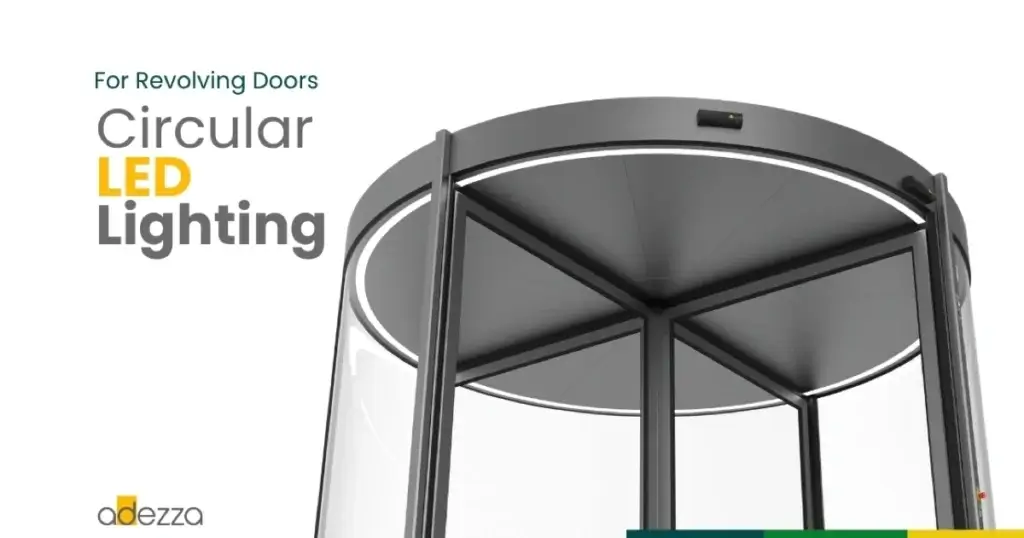
Adezza’s ADZ303 Automatic Revolving Door offers different diameter and wing configurations, supported by technical drawings and safety equipment options.
For a more detailed explanation of the mechanism, see our guide on what a revolving door is and how it works.
Automatic Sliding Doors
Automatic sliding doors use motorised panels that move horizontally along a guided mechanism to open the entrance.
Unlike hinged doors, sliding panels do not swing into the pedestrian approach area. However, sufficient lateral space is needed to accommodate the panels when open.
This makes automatic sliding doors suitable for many retail entrances, office buildings, healthcare facilities and commercial environments.
Single-panel and bi-parting configurations can be selected according to the available opening and project requirements.
Adezza’s ADZ250 Automatic Sliding Door incorporates a motorised control system and supports different activation and access arrangements, including motion-detecting radar, touchless sensors and optional access control devices.
Its opening and closing speeds, hold-open time and other operating settings can be adjusted according to the application.
Curved Automatic Sliding Doors
Curved sliding doors follow a shaped track rather than a straight horizontal line.
They are commonly considered where the architectural design incorporates rounded façades, curved glazing or a distinctive entrance geometry.
The principle of automatic operation remains similar to that of a conventional sliding door, but the panels, guiding mechanism and installation requirements differ.
The ADZ350 Curved Sliding Door is an example of a curved entrance solution designed to combine motorised operation with a more specialised architectural form.
Combined Revolving and Sliding Door Systems
Some commercial projects require both compartment-based revolving-door operation and a wider, more direct passage arrangement.
This may be relevant where the entrance must accommodate changing pedestrian demand, large objects or specialised movement requirements.
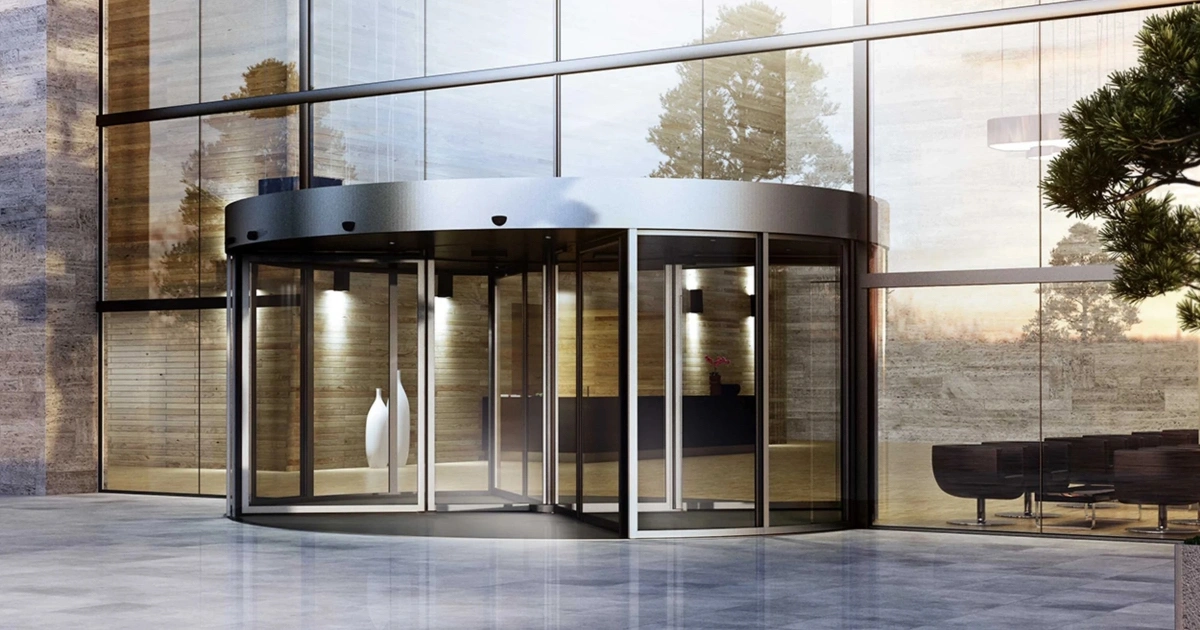
Adezza’s ADZ603 Combo 2-Leaf Revolving Door combines a two-wing revolving configuration with an integrated automatic sliding door in its central section.
The two movement functions provide flexibility for different operating scenarios.
This arrangement is model-specific and should not be assumed to apply to every two-wing revolving door.
What Are Sensor-Operated Doors?
Sensor-operated doors use detection equipment to initiate movement or support safe operation. The sensor does not replace the door’s motor or mechanical system; it provides information to the controller.
The type of sensor required depends on the function being performed.
Motion Detection Sensors
Motion detection radars identify people approaching the entrance and can generate an activation signal.
They are commonly used in automatic sliding door applications where users need the door to open as they approach.
Detection range and positioning must be configured according to the entrance layout and installation requirements.
Presence Detection and Safety Sensors
Presence sensors and safety photocells help monitor areas where door movement could create a risk.
Depending on the equipment and system configuration, they may prevent closing, stop movement or initiate another protective response.
The presence of a sensor alone does not establish the safety performance of the complete entrance system. Detection coverage, installation position and controller behaviour must be evaluated together.
Touchless Activation Sensors
Touchless hand sensors allow users to initiate an opening command without physically pressing a button.
These devices may be useful in entrances requiring an alternative to continuous motion-based activation or where a designated activation point is preferred.
Access Control Devices
Automatic doors can also receive commands from keypads, card readers and other compatible access control equipment.
These systems help manage authorised entry in offices, controlled-access buildings and other facilities.
Access control and pedestrian safety serve different purposes. A credential reader determines whether an opening request is authorised, while safety equipment manages risks associated with door movement.
Safety Sensors on Automatic Revolving Doors
Revolving doors may include specialised safety devices for areas where moving wings approach stationary components.
Examples include heel protection sensors, finger protection devices, presence sensors and light curtain detection equipment.
Their role is different from that of an activation radar. They are intended to detect specified hazards or conditions during operation.
Required equipment and whether it is standard or optional depend on the selected revolving door model.
Automatic Revolving Doors vs Automatic Sliding Doors
Both systems provide motorised passage, but their movement and entrance characteristics are different.
| Feature | Automatic Revolving Door | Automatic Sliding Door |
|---|---|---|
| Movement | Rotation around a central axis | Horizontal movement of panels |
| Passage | Through moving compartments | Through a direct opening |
| Space required | Circular footprint and approach space | Opening width and lateral panel space |
| Air exchange | Compartments can limit direct air exchange | Influenced by opening size and hold-open time |
| Activation and safety | Model-specific rotating-door controls | Sliding-door activation and detection controls |
| Typical consideration | Entrance geometry and passenger flow | Clear opening and panel movement |
The differences affect more than architectural appearance.
For example, a revolving door may help manage entrance-related air exchange, while a sliding door provides a direct opening suitable for particular pedestrian and accessibility requirements.
However, neither solution should be described as universally more energy-efficient or safer. Performance depends on the building, installation, operating settings and complete entrance design.
How to Choose the Right Automatic Door System
Selecting an automatic door should begin with the requirements of the building rather than the product catalogue.
An office entrance used heavily during morning and evening peaks may require a different solution from a hotel lobby where people frequently arrive with luggage.
The available entrance dimensions are equally important. A revolving door requires a suitable circular installation area and sufficient approach space. A sliding door requires room for the panels to move alongside the opening.
Pedestrian requirements should also be considered carefully. People carrying luggage, families with strollers and visitors with reduced mobility may have different passage needs.
Safety and accessibility must be assessed at the level of the complete entrance arrangement. An automatically operated door does not automatically satisfy all accessibility, emergency exit or evacuation requirements.
Other practical considerations include sensor coverage, electrical infrastructure, integration with building systems, maintenance access, expected operating hours and the response to power failure.
For refurbishment projects, a site survey can help identify limitations involving finished floor levels, structural openings and existing façade details.
Automatic Door Maintenance and Operational Reliability
Automatic door systems contain moving mechanical components, electronic controls and detection devices that require inspection and maintenance.
The appropriate maintenance programme depends on the manufacturer’s instructions, operating environment and level of use.
Typical checks may include door movement, sensor operation, safety functions, mechanical wear, controller settings and the condition of the supporting structure.
A poorly configured sensor can result in unnecessary door activations or unexpected operating behaviour. Regular inspection helps identify such issues before they affect entrance performance.
Maintenance should be carried out by appropriately qualified personnel in accordance with the relevant product instructions and applicable requirements.
Automatic Door Solutions from Adezza
Adezza develops automatic entrance solutions for different architectural and operational requirements.
Its product range includes automatic revolving doors, straight sliding doors, curved sliding doors and combined revolving-sliding configurations.
The ADZ303, ADZ250, ADZ350 and ADZ603 product families provide different approaches to motorised entrance design, allowing projects to be evaluated according to pedestrian movement, available space and technical requirements.
The right automatic door is not simply one that opens without physical contact. It should provide an appropriate passage arrangement, compatible safety equipment and reliable operation for its intended environment.
Explore Adezza’s automatic door products or request a project quotation based on your entrance dimensions and operational requirements.